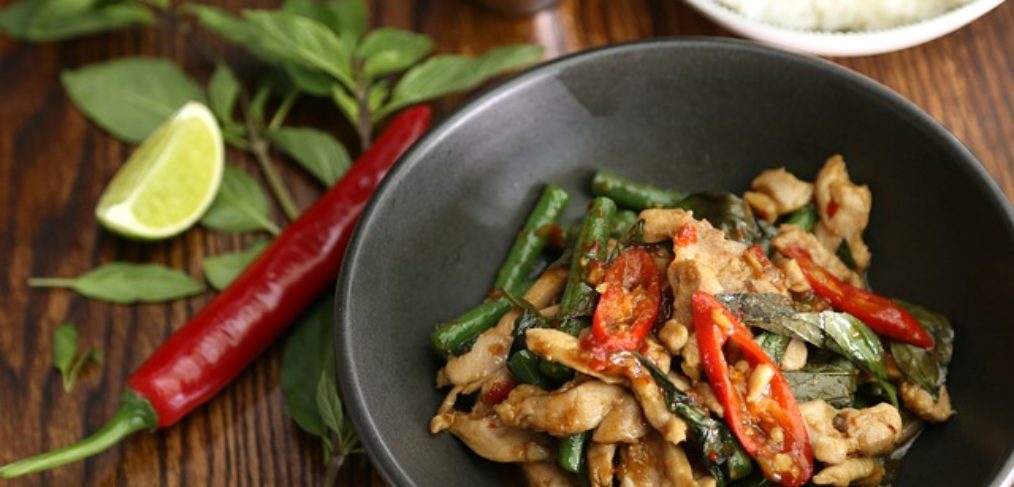
brands of fish sauce

Easy Basil Stir-Fry

Basil Stir-fry is easy, quick, and nutritious. For a dinner that comes together in a wink, try this popular Thai street food, also known as Pad Kaprow. Make it with chicken, beef, pork, or shrimp, and choose vegetables that fit your tastes.

The Benefits of This Easy Stir-Fry

  • Nutritional balance: In a single dish, you’ll get an appropriate balance not only of fats, carbs, and proteins, but also a healthy serving of phytonutrients from the herbs and vegetables. Additionally, this dish provides a nice harmony of the five tastes: sweet, salty, sour, spicy, and umami.
  • Anti-inflammatory: Although basil has many beneficial properties, one of its top healthy traits is that it may help lower inflammation through its oils, eugenol, citronellol and linalool. Including plenty of vegetables to this dish enhances the anti-inflammatory benefit of the meal.
  • Immune boosting: If you include mushrooms in your easy stir-fry, especially shiitakes, you can count on their immune-enhancing characteristics.

Which Basil to Use
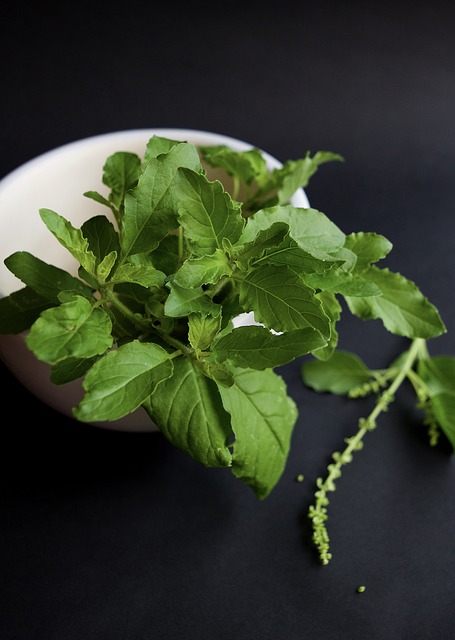
Thai basil, also known as holy basil or tulsi

Although the spicier Thai Holy Basil (Tulsi) suits this recipe best, feel free to use sweet Italian Basil instead if you cannot obtain the former. While sweet basil will give a different flavor profile, it will still be delicious. Adding perhaps a small amount of Thai basil to a bunch of sweet basil will provide the welcome licorice-like taste.

Thai basil has a more distinct flavor than Italian basil, similar to licorice or anise. It’s more savory and is a defining characteristic in Southeast Asian recipes. Because its sturdy leaves hold up well to longer cooking times, it’s the perfect punch for stewed dishes, soups, and stir-fries. Use it to spice up a dish with a heavy scent that has slight citrus notes.

A Note About Ingredients
  • Protein: Ground meats work best. If you’re not using a ground beef or sausage, cut meat into bite-size chunks. I personally enjoy sausage, but even vegan tempeh will work!
  • Soy Sauce: Traditional pad kaprow recipes use oyster sauce, soy sauce and dark soy sauce. To simplify the recipe and minimize ingredients, I have opted to stick with soy sauce only, spiked with a little molasses to give the characteristic thick sweetness of dark soy sauce.
  • Fish Sauce: Don’t scrimp here. This ingredient is important not only for saltiness, but for umami depth. I promise it tastes a hundred times better than it smells! I recommend traditionally-fermented Golden Boy or Red Boat fish sauce. After the you cook this easy stir-fry, you can add more if needed.
  • Palm Sugar: Extracted from the sap of various palm trees, including the sugar palm and the date palm, palm sap is boiled into a syrup, then crystallized. Coconut sugar is just one type of palm sugar. Palm sugar makes a good alternative to white sugar because it has been minimally processed and still retains many minerals, a few phytonutrients and some antioxidant properties. It has a lower glycemic index than white sugar.
  • Mushrooms: For flavor and immune-enhancement, shiitakes are your best bet, but oyster mushrooms and criminis are also good.
  • Beans or Pea pods: Be sure to add plenty to green to your easy stir-fry. They add aesthetics and polyphenols that will feed your beneficial gut microbiome. Polyphenols are antioxidants that help control inflammation. They are a major fuel source for your gut bugs.
  • Red and yellow bell peppers: These sweet peppers balance the savory taste of the mushrooms, add antioxidants to help with inflammation, and create a pleasing rainbow on your plate.
  • Water Chestnuts: Add these if you like a little crunch to offset the texture of the meat and rice.
  • Egg: This ingredient is optional, but for a truly traditional ethnic dish, fry in oil until crispy on the edges and serve on top of your stir-fry.

Easy Basil Stir-fry

This easy basil stir-fry infuses authentic Thai flavors into a dish that’s legendary over rice for a fast dinner you will crave.
Prep Time10 minutes
Cook Time10 minutes
Total Time20 minutes
Course: Main Course
Cuisine: Thai
Keyword: Basil, Beef, Chicken, Pork, Stir-fry
Servings: 4
Cost: $8

Equipment

  • Wok or skillet

Ingredients

  • 2 tbsp coconut oil
  • 1 lb. ground beef, pork, chicken, or shrimp
  • 2 red chilies, chopped (more or less for desired heat)
  • 3 cloves garlic, minced
  • 2 cups fresh vegetables (see ingredient notes, above)
  • 1 tbsp fish sauce
  • 2 tbsp soy sauce
  • 1 tbsp molasses
  • 2 tbsp water
  • 1 tbsp palm sugar
  • 1 bunch fresh basil, crushed
  • 2 cups cooked rice
  • 4 eggs, fried (optional)

Instructions

  • Melt the coconut oil in your wok or skillet over medium-high heat. Add the protein, garlic, and chilies. Stir-fry until protein changes color and is cooked through.
  • Mix in the chopped vegetables and continue stir-frying until they are fork-tender.
  • Add the soy sauce, fish sauce, molasses, water and palm sugar. Stir and cook until the palm sugar dissolves.
  • Mix in the basil leaves and cook just until fragrant and wilted.
  • Serve over warm rice. Top with fried egg, if desired.
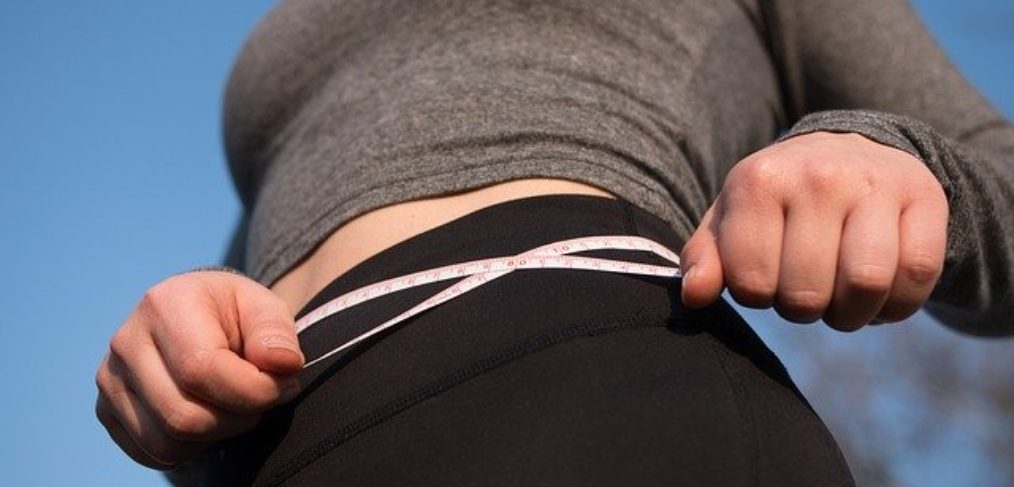
 

female measures weight loss with measuring tape

10 Weight Loss Tips

Stepping on the scale, counting calories, and exercising more are old school tools for weight loss. If you’re feeling stuck, try these more effective measures for trimming down your body weight.

Measure fat loss, not weight loss

Since your body fluctuates 2 to 3 pounds daily, and loses weight in fits & starts, it seems futile to be constantly monitoring the scale. The scale isn’t a measure of health, anyway. A person can be very muscular and actually weigh more than someone who is “over-fat.” Therefore, it’s better to assess your progress in terms of fat loss. Use an article of clothing that your try on once every couple of weeks. If you are truly in better shape, your clothing will fit differently, even if can’t measure weight loss in pounds.

Eat fat to lose fat

Fats are necessary for life, so a fat-restricted diet will stress the body. Bodies under stress tend to hold onto their weight as a survival mechanism. Only when your body is convinced there is no threat, will it begin to release its reserves.

However, not all fats are created equal. Avoid chemically-extracted vegetable oils (soy, cottonseed, canola, safflower, and corn); they loose their antioxidant protection during processing and become oxidized. Oxidized oils are one of the top contributors to free radical damage to your body tissues. And damage = inflammation = stress. Also stay away from trans-fats; they make your cell membranes stiff and less able to take in nutrients and excrete wastes.

Good sources of fats include unprocessed raw nuts and seeds, butter from grass-fed cows, and virgin fats that are cold-pressed and unrefined.

Track sugars, not calories

Counting calories is not a natural or intuitive way of life. In fact, it seems a bit obsessive. It certainly isn’t something I would want to do for the next 25 or 30 years.  In my opinion, any weight loss plan needs to be sustainable in order to head off yo-yo dieting.

Additionally, calorie restriction suppresses thyroid hormone. Hypothyroidism is a fast-track to weight gain, not weight loss. So, eat plenty of protein and fat to increase satiety, stimulate fat-burning, and provide amino acids and fat-soluble vitamins to the thyroid.

The root barrier to weight loss, in many cases, is high insulin hormone. Unfortunately, you can still have insulin-driven fat storage on a restricted diet. So, if you’re going to monitor anything, let it be sugar. Your fat-free yogurt that seems such a healthy breakfast alternative may have the same amount of sugar as a Red Bull energy drink. Some smoothies have more sugar than Coke, and a medium Jamba Chocolate Moo’d  has more sugar than a pint of Ben & Jerry’s Butter Pecan ice cream.

Differentiate between carbs

With all the media about ketogenic diets, it’s easy to think that carbohydrates are bad. However, they are not bad any more than a knife is. It can be very useful; or it can be very harmful, depending on how it is used. Obviously, a diet of high-sugar, low-nutrient carbs isn’t going to be very health-promoting. Too much bread, pasta, and cereal is going to lead to imbalance. But did you ever stop to think that fruits, vegetables, and legumes are carbohydrates, too?

A helpful way to think about carbohydrates is in terms of their calorie content and their potential to be absorbed into your bloodstream quickly. A food that is calorie-dense and quick-absorbing (such as a grain or a sweetener) is going to signal your body to store all that extra energy for a rainy day. Of course, energy storage is the antithesis of weight loss.

But calorie-light and slow-absorbing foods (such as vegetables) can be very beneficial. Medium-calorie carbohydrates, as long as they are slow-absorbing (whole fruit, legumes, nuts, and seeds), can also be helpful for a weight loss plan.

Be mindful of when you eat

Think of your car. After you gas it up, you can drive a long distance, or you can park it and keep the fuel in reserve for another time. The same principle applies for your body. If you want to burn the fuel, you can’t park yourself in a bed or chair for a great length of time and expect your meals to not become reserves. So, it’s best to front-load your meals. That is, eat bulk of your food when your are going to be most active. That’s because anything you don’t burn within 3 hours of eating is stored as fat. It doesn’t make sense to eat your heaviest meal just before bedtime. It’s a good idea to eat 3/4 of your food by mid-afternoon.

Remember, you’re not the boss

We have been conditioned to believe in the simple equation Energy In – Energy Out = Weight. Therefore, more energy expenditure will equal greater weight loss. But this equation neglects the fact that your hormones are in control. Thyroid hormone is king of metabolism. Cortisol reigns over your state of relative stress or relaxation. Insulin dictates how much fuel gets stored.

No matter how much you exercise, you will not lose weight if thyroid hormone is low, or if cortisol or insulin are chronically high. Exercising under these conditions just creates more stress for the body. Then, it switches to survival mode, and hoards fuel to help you fight or flee.

Ultimately, you have to balance hormones first. A functional practitioner can help you with this process.  Engage in “movement,” as opposed to “exercise” to promote stress-relief.

Address “food on the wrong side of the tracks”

Inflammation prevents weight loss; it’s a physical stress, so your body conserves until it is “safe” to let go of those pounds. Guts can be damaged by antibiotics, stress, chemicals, and sugar. Then, when the gut lining is thin and worn, food gets “on the wrong side of the tracks” and causes inflammation. We then say you are sensitive to those food proteins that are causing the inflammation.

If you’re serious about weight loss, you may have to remove triggering foods and heal your gut for a minimum of 3 months before your weight begins to drop, because it takes a while for inflammation to subside.

Support your liver before weight loss

Your liver is responsible for detoxifying everything that needs to be eliminated from your body. But if that organ is overburdened, it will send toxins to fat tissue to be stored where they cannot damage other tissues in your body. Naturally, weight loss frees those toxins from your fat tissue. If your liver is already overtaxed by medications, chemicals, or hormonal and blood sugar imbalances, your body will not release those toxins and you will continue to retain the fat.

The bottom line is that you need to support your liver first! This includes drinking ample water and eating abundant cruciferous vegetables to help your liver with the “rinse cycle” of laundering out your toxins. Potassium-rich fruits and vegetables are also important to help your body flush its wastes. Be sure to eat enough protein, for detoxification requires ample amino acids.

“Find your happy” at your current weight

It’s easy to think you will be happy when you lose those pounds. But your body follows your mind. Stated another way, your mind decides whether life is good and you can release your garbage, or whether your are unsatisfied and need to hold onto things that protect you (such as body fat). So, if you are genuinely grateful and joyful with who you are, your body can let go of those things that no longer serve it.

Don’t moisten your food with beverages

As mentioned above, healthy weight loss requires plenty of amino acids, vitamins, and minerals to support detoxification. Breaking down and absorbing those nutrients from your food requires good digestion with plenty of strong stomach acid. Although hydration is critically important, it’s best to sip your water between meals. After all, high liquid intake at meal times will dilute stomach acid. Hence, it will impair digestion. If your food seems dry or tasteless, chew it more. Your saliva will moisten it and sweeten it the longer you massage it in your mouth.