September 2019

Play helps kids eat veggies

Help Kids Eat Veggies

Will your kids eat veggies? Perhaps they’ll be more eager when you apply the principles below.

Veggies are Vital

It is not just a good idea to eat veggies. It is imperative! Without abundant vegetables in the diet, it is unrealistic to expect that you or your children will be getting enough vitamins, minerals, antioxidants and phytochemicals to regulate the immune system. The tragedy is that an immune system that does not have sufficient micronutrients becomes vulnerable to cancer, infections, autoimmunity, allergies and asthma. If you want to prevent chronic disease in your family, you have to eat more nutrient-dense food. That means lots of leafy greens, plenty of vibrantly-colored vegetables, and ample sulphur-containing vegetables (those in the cruciferous, onion, and mushroom families).

In addition, when you eat veggies in place of other carbohydrates, such as grains and fruit, you help balance blood sugars. We have an emergency to steady our blood sugars, because statistically, one in three is pre-diabetic.

Help Kids Eat Veggies

It’s not a psychological mystery that children love making cookies and hate eating their vegetables. Beyond the difference between natural sugars and refined sugars, there are fundamental distinctions in the way we approach cookies versus vegetables.

It’s a sign of “mom love” to make cookies together. You and your child bond when you share the experiences of mixing ingredients, frosting, and celebrating with cookies. But do you get excited to make vegetable recipes and serve them to friends during holidays and special occasions? Most likely, you sternly tell your children that they have to eat their vegetables before they get a treat.

Principles for Celebrating Vegetables

The following principles are taken from the work of Melanie Potock, feeding therapist, who blogs at My Munch Bug.

  • Friendship Principle: If you want to be friends with vegetables, they have to come play at your house frequently! Not only that, you have to model a friendship with veggies yourself.
  • Curiosity Principle: Let your child experience and explore veggies through cooking, eating out, growing food, and culinary field trips. A child should be able to touch and smell a vegetable long before he is expected to touch it to his lips, put it on his tongue, and eventually eat it.
  • Play Principle: Encourage him to use all of his senses in exploring the unique characteristics of each vegetable! Be creative and spontaneous. No ultimatums here!
  • Firmness Principle: If your child knows that you will not require him to eat something if he doesn’t like it, he will learn he doesn’t have to try anything new. Instead, model this sentence: “I don’t care for it yet, but I’m practicing!” Kids must understand that vegetables are not optional.
  • Kindness Principle: Kids may have anxiety about eating new foods. So, rather than forcing them, help them become comfortable by repeated exposure and play.

Play with Your Veggies

Here are some ideas evolved from Potock’s book, Adventures in Veggielandthat you can use to help your children eat more veggies.

  • Stamp on some tattoos with beets, then rub them off with potatoes.
  • Create sheep, or even teddy bears and other beasts, with cauliflower, broccoli, and toothpicks.
  • Play Mr. Potato Head with large vegetables, such as eggplant, butternut squash, celery root, or jicama.
  • Build log cabins with asparagus stalks. Also, you could also use green beans, or julienned yams, turnips, rutabaga, kohlrabi, or parsnips.
  • Play Tic Tac Toe with any veggies that can be made into coins and matchsticks.

Make Veggies Playful

I suggested several ways to present vegetables in a playful manner in my post, The Nutrient-Dense Lunchbox. In addition, you can always use vegetables in making a treat. For example, you could put pureed spinach in chocolate pudding, or make cake using cauliflower (See my post, Eat More Veggies.) How about ice cream with red bell peppers in it, or apple crisp that uses squash?

Recipes to Help Kids Eat Veggies

The following recipes are adapted from Potock’s book.

Can’t Be Beet Dip

  • 1 medium beet, or 2-3 small beets
  • 1 small banana
  • 3 Tb. plain Greek yogurt
  • 1 Tb. honey (optional)

Roast the beet(s) by wrapping in foil and baking at 375 for 45 minutes or by slow-cooking in a crock pot for 2-3 hours. (Hint: you may cook a whole batch at once and refrigerate them until use.) Cut off the ends and slip the skin off. Puree in a blender with the remaining ingredients. Serve with apples and crackers.

Chocolate-Asparagus Fondue

  • 4 large asparagus stalks
  • 2/3 c. coconut milk
  • 6 oz. dark chocolate bar (70% cacao)
  • 1 tsp. pure vanilla extract
  • Strawberry & banana slices for dipping

Snap off the woody ends of the asparagus and peel away the thick skin. Steam asparagus until very soft. Place in blender with 2 Tb. of the coconut milk. Process until very smooth. Melt the chocolate with the remaining coconut milk and the vanilla over low heat. Add the asparagus mixture and get ready to dip!

Cauliflower Popcorn

  • 2 heads cauliflower, different colors if desired
  • 1/4 c. melted coconut oil
  • 2 Tb. pure maple syrup
  • 1 tsp. ground cinnamon
  • Sea salt to taste

Preheat oven to 400°F. In a large bowl, break cauliflower into tiny florets. Combine coconut oil, maple syrup and cinnamon and pour over florets, coating evenly. Spread on foil-lined  baking sheets and roast 20 minutes. Sprinkle with salt and serve.

Butternut Squash Crumble

  • 1/2 of a butternut squash, peeled, seeded & cubed ( or 8 oz. package)
  • 1/4 c. dried tart cherries
  • 1/4 c. chopped pecans
  • 1 Tb. melted butter
  • 2 tsp. pure maple syrup
  • 1/2 tsp. ground cinnamon

Preheat the oven to 350°F. Toss all ingredients together and place in a square baking dish. Cover with topping (below). Bake 45 minutes, until topping is lightly browned.

Topping:

  • 1/2 c. oats
  • 1/4 c. oat flour
  • 1/4 c. sugar
  • 1 tsp. cinnamon
  • 1/4 c. softened butter

Mix topping ingredients together with a fork until crumbly. Scatter over the squash filling.

Cherry & Red Bell Ice Cream

  • 1 large red bell pepper, seeded & cut into chunks
  • 1 c. frozen cherries
  • 2 c. half & half (or coconut milk, if preferred)
  • 1/2 c. sugar
  • 1 tsp. vanilla extract

Blend until smooth. Freeze according to manufacturer’s directions.

The Functional Nutritionist uses clinical tests to evaluate nutrient sufficiency

Functional Nutrition Supports Healing

Functional Nutrition seeks to give you living nourishment for optimal wellness, supporting you on a cellular level from the ground up.

When you’re motivated to improve your health, what practitioner is best to guide your eating habits? Should you contact a dietitian, a health coach, or a functional nutritionist? That depends on the question you’re asking.

A Dietitian Diagnoses and Treats What is Wrong

Suppose you are concerned about your weight. A dietitian will identify whether you are simply overweight, or whether you are actually obese. She may even classify you as insulin resistant or pre-diabetic. She will then prescribe a diet aimed at correcting that condition. A dietitian’s program will most likely work for you in the short term.  It is what we call an “end-stage” approach.

A Health Coach Assesses How You Can Treat Your Condition

A health coach will take on more of a mentor role, and will discuss options that fit your lifestyle. He may present you with several possible diet plans and will work with your to craft the one that harmonizes best with your individual needs. He may also suggest exercise and stress management plans, for a more whole approach to wellness. You may engage in several fitness challenges with other program participants and have classes on implementing new lifestyle strategies.

A Functional Nutritionist Asks Why You Are Having Trouble

She will look for root imbalances. Are you gaining weight because of eating habits, stress, hormone imbalances, lack of activity, disease, or food sensitivities? Her goal is not to treat the weight itself, but to bring your body back into homeostasis (stability) so that your weight will normalize within your ideal range. She is not diagnosing or even “treating a condition.” She is looking at the “terrain” of your body. Her aim is to work with dysfunction on a cellular level to support optimal wellness before you reach the end-stage condition.

A Comparison of Conventional Nutrition and Functional Nutrition

The conventional nutritionist works within the framework of:

  • A diet plan based on symptoms
  • The low-fat, low calorie approach
  • Emphasis on food quantities
  • Less meat, sugar, fat, and sodium
  • Inclusion of some processed and fortified foods
  • Increased exercise to burn more calories

The functional nutritionist’s paradigm includes:

  • Your relationships to food and other individuals
  • The roles of stress, sleep, and exercise in your life
  • Emphasis on quality of food
  • More nutrient-dense options in your menu
  • Suggested testing for nutrient sufficiency and genetic tendencies
  • A bio-individual approach based on personal need

Your Story Matters to a Functional Nutritionist

Before your appointment, your functional nutritionist will ask for a health history and a food journal. She will then assess all of your symptoms – everything from dry skin and brittle nails to burping and bloating after meals. She’ll want to know whether you have headaches when you skip a meal, and whether you crave greasy, fatty, or sweet foods matters. Don’t be embarrassed to share if you poop “rocks,” “snakes,” or “pudding.” She will even be interested in the times you feel anxious, spacey, or depressed. In her book, all the body systems are interconnected, and she is looking at you as a whole person.

What Happens During Your Office Visit

After reviewing a graph she has printed based on your symptoms, she will ask to check a few reflex points, look at your pupils, or take a saliva pH. She may ask you to put some nutrients in your mouth, or take a standing blood pressure. Using clinical tests developed by doctors before labs tests were widely available, she may take your pulse or put a blood pressure cuff around your calf. Finally, she will counsel with you about your openness to dietary changes and supplement recommendations. Then, she will develop a personalized plan for you to follow that ensures life-giving nourishment.

How Functional Nutrition Helped Me

When I was just 33, I was diagnosed with high blood pressure. At the time, nutrition science and epigenetics were largely undeveloped. The doctor said it was probably my genes. So, I would just have to take medication for the rest of my life. I wasn’t happy over that verdict of what I should do. Why was my health  deteriorating at such an early age?

My search led to my becoming certified as a functional nutritionist. Along the way, I gained tools to stabilize my blood sugars and support my adrenal health. Also, I learned of my body’s own tendency to be deficient in B vitamins and my need for extra Vitamin D, based on my geographical location. Encouraged to develop my own recipes, I enjoyed an abundance of healing foods without deprivation. At last, I had the thrill of watching weight and my blood lipids normalize! Now, I no longer have Metabolic Syndrome!

The real difference was that the functional approach provided true healing from the bottom up. But the conventional approach was only like a band-aid.

Would you like to see this change in your life? Let’s talk about how I can help you!

Don't have time to eat on your busy mornings?

Breakfasts For Busy Mornings

  1.  

    Need help eating right on busy mornings? Certainly, you need breakfasts that are quick and easy! But you need them to be nutrient-dense, too! Fighting inflammation requires a host of vitamins, minerals, amino acids, essential fatty acids, and phytochemicals! So, You can’t just buy toaster pastries and be optimally well!

Do Your Prep on the Weekend

One way to conquer the busy morning frenzy is to assemble and freeze ingredients ahead of time. For example, Pizza Burritos made with zucchini and mushrooms provide lots of potassium and B vitamins.

Pizza Burritos

A Breakfast Burrito for busy mornings

  • 1 zucchini, grated
  • 6 mushrooms, chopped
  • 1/2 lb. ground Italian sausage
  • 1 tsp. Italian seasoning
  • 6 eggs, beaten
  • salt & pepper
  • 3/4 c. grated mozzarella cheese
  • Tortillas

In a large skillet over medium heat, brown the meat with the zucchini, mushrooms and Italian seasoning. When the mushrooms are softened and the meat is evenly browned, pour the beaten eggs over the sausage mixture. Season with salt & pepper. Then, cover, reduce heat to medium low, and cook until set. Using a spatula, transfer onto tortillas. Sprinkle with cheese, roll, wrap in plastic and freeze.

The Crock Pot is Your Ally Against Busy Mornings

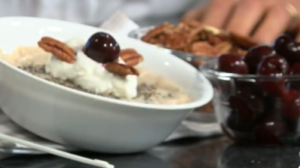
Oats with yogurt, cherries and nuts

Take just a few moments to put ingredients into a crock pot or Instant Pot at bedtime. Breakfast will be ready when you are. Combining steel cut oats with Greek yogurt makes a creamy, high protein breakfast. Top it with antioxidant cherries and zinc-filled pecans for even better nutrition. Last of all, add crunchy chia seeds for an Omega 3 boost.

  • 1 c. steel-cut oats
  • 1 1/2 tsp. salt
  • 4 cups bone broth (for added protein)
  • 1 c. Greek yogurt (I like FAGE Total 5%  to balance blood sugars)
  • Frozen cherries
  • Pecans
  • Chia seeds
  • cinnamon and nutmeg, optional

Spray your crock or Instant Pot liner with non-stick cooking spray. Put the oats, salt and broth into the crock or liner. For the crock pot, set temperature to low. If you are using an Instant Pot, employ delay feature to start cooking 20 minutes before you want breakfast ready. Set cook time to 10 minutes. Let cool naturally for 10 minutes before releasing the pressure.

Just before serving, stir in yogurt and scoop into 4 bowls. Finally, top with additional ingredients.

Microwave a Grab-and-Go Sandwich

Microwave-poached eggs in pita, English muffin, and tostada

You can poach an egg in just 60 seconds using your microwave! Fill a ramekin with 1/4 cup water and break an egg into it. Before you cook it, puncture the yolk and cover with plastic wrap. Check after 30 seconds of cooking and microwave another 20 seconds if needed. Then, toss it onto a tostada, slip it into an English muffin, or stuff it into a pita. Besides egg and grain, you can add cheese, meat, spinach, sprouts, tomato, or avocado to balance your meal. For example,

  • Southwestern Tostada: Add cotija, refried beans, and pico de gallo
  • Club English Muffin: Include ham, swiss, turkey and spinach
  • All-Star Pita: Load it up with sprouts, avocado and bacon

Quickly Blend Your Nutrition

A superfood smoothie is quick on a busy morning

Do you love a speedy smoothie for busy mornings? Then whirl antioxidant blueberries with probiotic kefir for a superfood breakfast. Top with hemp hearts for essential fatty acids.

  • 1 1/2 c. plain, unsweetened kefir
  • 1/2 c. coconut water (for electrolytes)
  • 12 oz. frozen blueberries
  • 1 avocado (for added creaminess and blood sugar balance)
  • 2 scoops protein powder
  • juice of 1 lime
  • 1 Tb. honey
  • hemp hearts

Blend all but the hemp hearts. Divide between 2 tall glasses. Top with hemp hearts.

Deep Nutrition is Part of Functional Medicine

Preventing and reversing chronic disease means addressing the roots of inflammation. Minimizing the stress of your busy mornings and eating nutrient-dense anti-inflammatory food are impactful choices to help you be well.  Learn more about your power to change inflammation in my 4-week Functional Nutrition Course.

A cup of greens daily can boost your health

How to Eat 3 Cups of Greens Daily

Your health may be a reflection of how many cups of greens you eat per day. Nutritionists and scientists agree that the more vegetables you eat, the better. Not only that, dark leafy greens seem to trump other foods when it comes to specific health benefits. African, Indian, and Asian cultures all have rich culinary traditions that include bountiful quantities of leafy greens. In Western society, treatment protocols for healing chronic disease, such as the Wahls protocol, include at least of cup of dark greens every meal.

Can you eat that many cups of greens? You probably can down a green smoothie for breakfast, and grab a spinach salad for lunch. But everyday?

Let me show you how other cultures do it.

Simple Indian Creamed Farmer Greens ( Saag)

20 oz. mixed beet greens, kale, spinach, chard, or mustard greens (about 20 cups of greens)

1 c. water

2 Tb. coconut oil

1 tsp. cumin seeds

1 onion, thinly sliced

2 inches of ginger root, julienned

1/2 c. coconut milk

Wash the greens, cut away the tough stalks, and roughly chop. Place in a large stockpot with water and steam 20 minutes. Meanwhile, heat the oil in a skillet over medium high heat. When the oil ripples, add the cumin seed. After 30 seconds, reduce the skillet heat to medium low and add the onions and ginger. Saute until the onion caramelizes.

In a food processor or blender, puree the cooked greens and their steaming water with the onion mixture. Return to the pot and cook on low until the mixture thickens, about 20 minutes more. Stir in the coconut milk and season to taste with salt and pepper.  Serves 5.

African Spinach Stew (Efo Riro)

2 onions, chopped

2-4 Tb. curry powder, according to your preference

1/2 – 1 1/2 tsp. red pepper flakes, according to preference

1 tsp. salt

2-3 c. bone broth

1 lb. stew meat, cut into 1″ pieces

6 large tomatoes, diced

3 Tb. unrefined red palm oil

1 tsp. dried crayfish, optional (but it lends the characteristic Nigerian flavor)

3 10-oz. bags of spinach, chopped (freeze then crumple the bags to speedily break the leaves into pieces)

In a large soup pot over medium heat, simmer one of the onions, the seasonings and the stew meat in enough broth to cover the meat. (Add more if needed.) Cook slowly until reduced to a very thick, mixture, about an hour. While the meat mixture is cooking down, melt the palm oil in a skillet over medium low heat. Add the tomatoes and the second onion. Saute slowly, stirring occasionally, until the tomatoes are broken down and the vegetables form a paste, about 30 minutes.

Add the tomato mixture to the meat mixture. Stir in crayfish and spinach. Heat until spinach is wilted. Served with fufu, rice, or potatoes.

Chinese Wilted Greens (Fan Chao)

Growing up, not having a plate of Chinese greens on the table for dinner was like not having rice—it was simply unthinkable.   – Shao Z.

1 lb. bok choy, napa cabbage, gai lan, or choy sum (may use spinach, chard, or kale)

2 Tb. cooking oil

1 Tb. minced garlic

1/2 c. bone broth

Oyster sauce, optional

Chop the greens into 3″ pieces. Heat oil in a wok or heavy skillet over medium heat. Add the garlic and saute for 1 minute. Add greens and stir-fry just until coated with oil. Pour in the broth, cover, and steam for about 3 minutes. Leaves should be tender and bright green.  If desired, serve with a drizzle of oyster sauce.