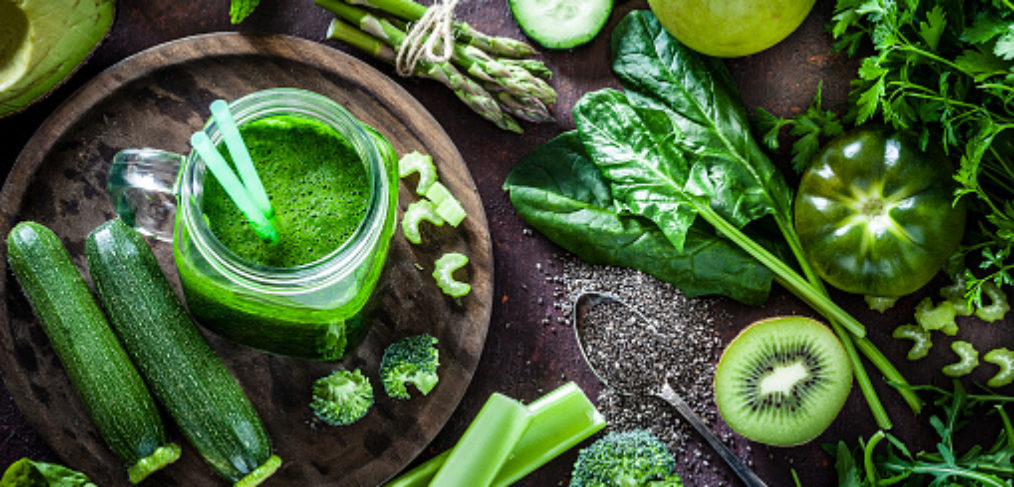
A greener summer isn’t just about lawns and forests. It’s about your diet, too. You know vegetables are good for you – especially those leafy greens and the cruciferous kind, like broccoli, and Brussels sprouts. But maybe you don’t know why you should eat them…or how! Here’s my list of what naturally green food does for you. I especially like #3 and #4 when it comes to stabilizing blood sugars and reducing inflammation. So, read on! I’ll tell you how to use them next.
A Dozen Health Benefits of Green Vegetables
Green vegetables are a powerhouse of nutrients to keep you in top form. While I can’t list all of the vitamins, minerals, and phytochemicals they contain, here are my favorites:
1 – Folate
A precursor for methylation, this vitamin occurs in greens almost more than in any other food. So what? Well, methylation processes toxins, builds neurotransmitters, recycles spent hormones, and creates immune cells. But that’s not all: it synthesizes DNA, produces energy, and maintains the integrity of your cell membranes.
2 – Minerals
Probably only liver has more minerals. I bet you’d rather eat spinach than liver. But why are minerals critical? They’re like spark plugs in the body. We call them co-factors, but basically, they help trigger all the reactions and functions your body performs. For example, take immunity. If you don’t have enough minerals, your immune system can’t regulate itself. It runs too fast or too slow. Then you are vulnerable to allergies, asthma, and autoimmunity on the one hand, or cancer on the other.
3 – Fiber
If you’re concerned about carbohydrate intake, vegetables are the answer. Eat as many as you like of these carbs without spiking blood sugars because their fiber content slows their absorption into the bloodstream. Nature knows that her greener summer is not only pretty, but healthy!
4 – Antioxidants
Green vegetables have many antioxidants that help reduce inflammation, including vitamin C and chlorophyll – the stuff that makes them green! If you really wanted to, I suppose you could just drink liquid vitamin C and chlorophyll. But it’s probably more pleasant to eat Caesar salad and pesto.
5 – Potassium
This humble electrolyte is a champ at fighting bloat and fluid retention. Since you’re not going to find this nutrient in abundance in animal foods, vegetables are your go-to.
6 – Beta carotene
Known as the plant pigment that gives carrots, squash and cantaloupe their color, this nutrient is more prevalent in dark leafy greens than it is in orange vegetables. While you might connect beta carotene to eye health, it is also important for healthy skin. In fact, it is considered a natural sunscreen.
7 – Magnesium
If you’re stressed or have high blood pressure, eat more greens. Magnesium, abundant in vegetables, especially green ones, is a relaxant. That goes for tight muscles and for constricted blood vessels, too.
8 – Calcium
Arguably, dairy foods have more calcium than dark leafy greens. But you only absorb about 30% of that calcium. While broccoli and kale may have less calcium to begin with, you uptake a much higher percentage from them. So to cover your bases, it’s great to round out your diet with plenty of leafy greens to protect your bone health.
9 – Polyphenols
These are micronutrients found only in plants. Among their wide and varied benefits are the ability to fight disease and bolster immunity. Therefore, not only do you need a greener summer, but a greener winter, too.
10 – Prebiotics
You probably know the importance of probiotics to your gut health. The thing is, probiotics are living organisms. That means they need to eat. The beneficial bacteria in your gut tend to languish on simple sugars and refined carbohydrates. However, they thrive on the plant fiber – prebiotic material – that is so hard for you to digest. So, if you think asparagus has too much fiber for your comfort, think again! You are feeding a healthy microbiome, and these bacteria, in turn, are helping you to digest your food.
11 – Chlorophyll
Although I mentioned this amazing nutrient as an anti-inflammatory antioxidant, it has many assets. Chlorophyll is amazing for detoxification because it has the quality of being able to bind heavy metals and escort them out of the body. Chlorophyll helps cleanse your liver.
12 – Live enzymes
When it comes to digestion, enzymes have a lot of work to do. Your body makes digestive enzymes in the pancreas. But the more live enzymes you eat, the less the burden on your pancreas. You are getting live enzymes any time you eat raw plant food, such as celery sticks, cucumber slices, and snap peas.
50 Ways to a Greener Summer
Okay, now that you know why you should eat more green vegetables, let’s talk about how! I get pretty bored with having salads all the time, and a side of broccoli is not very exciting. However, nature is so versatile, there’s no reason to limit yourself to iceberg! Just to get you started, I’ve listed 50 ideas. Since recipes are prolific on the internet, I’ve left the interpretation open to your personal taste.
- Alfalfa sprouts blended into a fruit smoothie
- Parsley, finely chopped, and sprinkled into a sausage and sweet potato skillet
- Mint leaves to perk up a mundane salad
- Nettle steeped and chilled for iced tea
- Clover sprouts tucked into wraps
- Broccoli sprouts on top of avocado toast
- Cress nestled in sandwiches
- Spinach, minced and mixed into spaghetti sauce
- Mung bean sprouts served atop any soup
- Broccoli, chopped, steamed, and stirred into teriyaki sauce
- Kale massaged into tropical fruit salad
- Chives accenting a potato salad
- Basil on a skewer with tomato and watermelon
- Arugula tossed with roasted squash, potatoes,beets, and carrots
- Mesclun mix served with strawberries and poppy seed dressing
- Pea shoots added to stir-fry
- Asparagus, chopped, and served in risotto
- Cilantro blended into avocado & tomatillo dressing for Mexican dishes
- Brussels sprouts sauteed in an apple & bacon skillet
- Pesto stirred into white bean soup
- Collard greens lightly steamed and rolled with any filling for wraps
- Swiss chard, steamed, and folded into creamy bechamel with green onion
- Green beans grilled with cherry tomatoes and seasoned with basil and oregano
- Green bell pepper stuffed with stew, pilaf, or frittata
- Romaine grilled with olive oil and red pepper flakes before tossing into soup
- Endive (also known as chicory) lightly braised with andouille sausage and added to pasta
- Okra simmered in jambalaya
- Kohlrabi grated into cole slaw
- Zucchini grated into pancake batter
- Fennel sauteed in butter with pear halves, then dressed with honey and cream
- Turnip greens wilted as a bed for meat or fish
- Beet greens tossed with olive oil and baked until crispy for chips
- Bok choy shredded into Oriental salad
- Mustard greens simmered in Indian curry
- Artichoke hearts accenting pizza
- Celery, stir-fried, and served with chopped hazelnuts
- Leeks sliced into scalloped potatoes or baked beans before cooking
- Scallions sliced into frittata
- Cabbage slow-cooked with roasts
- Rapini blanched and sauteed with garlic and baby red potatoes
- Dandelion greens steeped in a tea
- Snap peas tossed with green onion slices and feta cheese then dressed with vinaigrette
- Snow peas sauteed with carrots, drizzled with honey, and topped with peanuts
- Peas piled onto creamy polenta and topped with parmesan
- Cucumber, hollowed, and filled with chicken salad
- Oregano minced into bread dough
- Fenugreek leaves chopped into Indian butter chicken
- Spirulina sprinkled into black bean dip
- Kelp, dried, and mixed into your salt shaker as a natural source of iodine
- Nori folded into an omelet
What other ways can you think of to have a greener summer?