March 2019

Are you powerless to stop sugar cravings?

Stop Sugar Cravings

You crave sugar when you are undernourished or overstimulated. But by eating a nutrient-rich diet, you stop sugar cravings now and prevent them in the future. Why? Because you are providing deep nourishment and reducing the physiological stimuli that drive sugar cravings.

How Undernourishment Starts

By definition, undernourishment means your energy output is greater than your fuel input. You can develop this energy debt in a number of ways.

To begin with, perhaps you cut your night’s rest a bit short. Then, who wouldn’t want a doughnut in order to keep running on fumes? Sugar provides a quick source of fast-burning energy – like kindling on your metabolic fire. So, when the coals are almost dead, a sugary snack fans the flames.

But it doesn’t provide the essential vitamins, minerals, fatty acids, and phytochemicals your body needs to be well. So that empty calorie food just increased your energy debt! Did you know that it takes more than a dozen molecules of magnesium to change one molecule of sugar into energy that your cells can use? Further, the processes that change that sugar into fuel require certain enzymes to get them started – the way a car engine requires a spark plug to ignite the gasoline. Your body makes enzymes from proteins. If you’re not eating enough proteins, your body has to “cannibalize” its own tissues to get the raw materials it needs.

Another way you become undernourished is through blood sugar imbalances. When your sweet snack burns out, you drop into a state of hypoglycemia, or low blood sugar. Like a stalled car on the freeway, you can no longer stay in the fast lane. So, you reach for emergency rations – a candy bar for instant relief. Like a bad dream, the cycle starts all over again.

Eventually, these habits cripple your ability to use the sugar you are eating. The lack of vitamins and minerals arrest your body’s natural metabolism. Finally, insulin resistance sets in, blocking the limited nutrients you have from entering cells. You are in a permanent state of fatigue and even more dependent on empty calories to function from one moment to the next.

Stop Sugar Cravings Resulting From Undernourishment

The answer to this hopeless cycle is really very straightforward. You make sure you have enough gas in the tank at the outset of your journey. That means you make sure arise well-rested each morning, and eat a nutrient-rich breakfast. The most nutrient-dense foods on the planet include vegetables, seafood, and organ meats. But not coffee and pastries, or even Cheerios. So, why not make a skillet of Fisherman’s Eggs to start the day? (See the end of the article for the recipe.)

How Overstimulation Happens

First, like the lack of sleep, stress raises your demand for energy. But in this case, your body is stimulated by stress hormones to quicken your breath, send blood to the brain and muscles, and increase your heart rate. You need more energy now!

Second, in a nightmarish way, you become addicted to the surge of dopamine the stress created. Your body now wants constant stimulation, and it turns to sugar and other stimulants to keep the rush going. But none of these fixes gives you the deep nourishment you need for optimal health.

Then, down in your gut, the beneficial bacteria begin dying, starved of the fibers and Omega 3 fatty acids they need for vitality. Meanwhile, pathogenic strains of bacteria feed on your high-glycemic diet. When you don’t supply their sugary feast, they demand it by creating cravings.

Stop Sugar Cravings Resulting from Over-Stimulation

But the answer is always the same. Go back to your roots. Skip the commercial, man-made foods and nourish yourself with the foods of nature that have sustained mankind for millenia. Eat fresh vegetables and fruits. Take the time for unprocessed grains, nuts, and seeds. Make sure to get some wild-caught, pastured, or grass-fed protein. Then cook and dress your food in unrefined, natural fats. Check out these ideas on how to eat traditionally without spending endless hours in the kitchen!

If you’d like to delve deeper into how to stop sugar cravings, Dr. Jockers has an excellent article.


Use Roasted chicken & veggies to cook once and eat 6 times

Cook Once; Eat 6 Meals

If you’re going to eat healthy, you need to be able to make home cookin’ as convenient as take-out or fast food. Here’s how to spend just 60 minutes to cook once and eat 6 meals. I call them Mighty Meals.

Prepare the Food

  • Chop many different types of vegetables: some leafy greens, some colors, some sulphurs, and some roots. Prepare enough to feed yourself or your family for several days. A mandolin slicer may be a handy way to do this quickly.
  • Add a protein. Include variety, such as tempeh, tofu, poultry, fish, shellfish, wild game, or traditional meat.
  • Season liberally. You can choose a commercial spice blend such as Mexican, Italian, Chinese, or Cajun, or make your own.
  • Then bake, fry, grill, or slow-cook with a natural fat, such as tallow or coconut oil. To accommodate a large batch, use an Instant Pot, a wok, or a roaster pan.

Now Eat 6 Meals

Take just a portion of this Mighty Meal base entrée mix to make a different meal each day.

  • Fresh off the grill or out of the roasting pan, splash the food with balsamic vinegar and serve.
  • For a teriyaki bowl, scoop some cooked rice into a dish, add your entrée mix, and drizzle with soy sauce, pineapple juice and grated  garlic and ginger root.
  • To make some comfort food, combine the entrée mix with barbecue sauce and ladle onto a baked potato or yam.
  • Soup is easy. Cover the entrée mix with broth. Whisk in some tomato paste, or cream, depending on the type of soup you want.
  • Perhaps you prefer salad. Start with a base of dark leafy greens. Add the entrée mix, and dress with olive oil whisked together with mustard and red wine vinegar.
  • Finally, stuff the leftovers into a pita or wrap. All you need now to complete this is condiments and lettuce.

Who says eating healthy has to be hard? Or boring! With such convenience, why not cook once to eat 6 meals?

P.S. When you work with me, you get the Mighty Meal Menu Planner and the Mighty Meal Mix-&-Match Template for free!


This is Sherry's story of beating inflammation

Beating Inflammation

Today we have a guest post from Sherry Worthington, a nurse, who didn’t realize the connection between sugar and inflammation until it was almost too late. Here is her story of beating inflammation:

My breath wouldn’t come. Numbness surged through my limbs. I heard nothing more after the doctor said, “I don’t feel comfortable treating you any more, due to your immune system.”

The tiny sparkle of hope that had been there a moment ago tumbled into oblivion. I was speechless. My dark world was mirrored by the night sky when I left his office.

The Darkness of Lost Hope

No more medication to treat the crippling rheumatoid arthritis that fettered my days and seared my nights? No more relief from the tiny hammers beating inside my body incessantly? How was I to sleep? Or dress? Or eat? I was going to deteriorate inch by inch into lifelessness!

My tears blurred with the days. But there was no other option. Accept it. Just accept it.

But how could I? How could I descend any lower? In addition to RA, I had hypertension, osteopenia, stasis dermatitis, degenerative disc disease, stenosis, reversal cervical lordosis, B-12 deficiency and sleep apnea. Shots in my neck and back for pain relief had been largely unsuccessful. My high-powered pharmaceuticals with devastating side effects had only been minimally effective in managing symptoms. And even these had been withdrawn when my weak and compromised immune system had descended into pneumonia, followed by sepsis. It was too dangerous to take them now, the doctor thought.But how was I to cope?

Just showering and dressing fatigued me so drastically that I fell asleep at work – or threw up. My fingers tingled constantly. Sometimes my pulse would suddenly spike to 110. Dizziness and nausea haunted me. At night, I would wake up every hour or two, trying to coax my body back into repose.

At some point, I found an RA support group on Facebook. Women from another country started talking to me about diet and holistic approaches. That spurred me into research, where I absorbed massive mounds of information. Confusion reigned initially as I sifted through the flood of suggestions.

The Beginning of Beating Inflammation

Unsuccessful at finding a local support group, and hoping for more personal conversations, I started my own. As I posted the information I was finding, it became clear:

I could do this! I could find relief if I just kept educating myself!

My self-treatments started with herbs: boswellia and turmeric. With some minor degree of success, I kept going. A breakthrough came when I purchased the Autoimmune Wellness Handbook by Angie Alt and Mickey Trescott. It urged an elimination diet. Would I need to do that? If certain foods really were not good for me, then why were they on the grocery store shelves? But I was desperate.

I took out refined sugars and felt a difference! Then I removed processed foods, and the improvement heightened. The dizziness and nausea were diminishing. I added vitamins, minerals, Omega 3’s and started massage therapy and essential oils. I was beating inflammation!

A year later, I have moved from the highest pain patch available to the lowest. My bad days are few and far between – and when they come, I can get relief within a few hours.

I cannot go back to the medications. There is another way: the way of hope! The way of beating inflammation with food and holistic approaches. If you don’t know where to start, contact a nutritionist, and eliminate sugars. And may my story inspire you to believe things can get better!

The Diet Brain Connection

The Diet Brain Connection

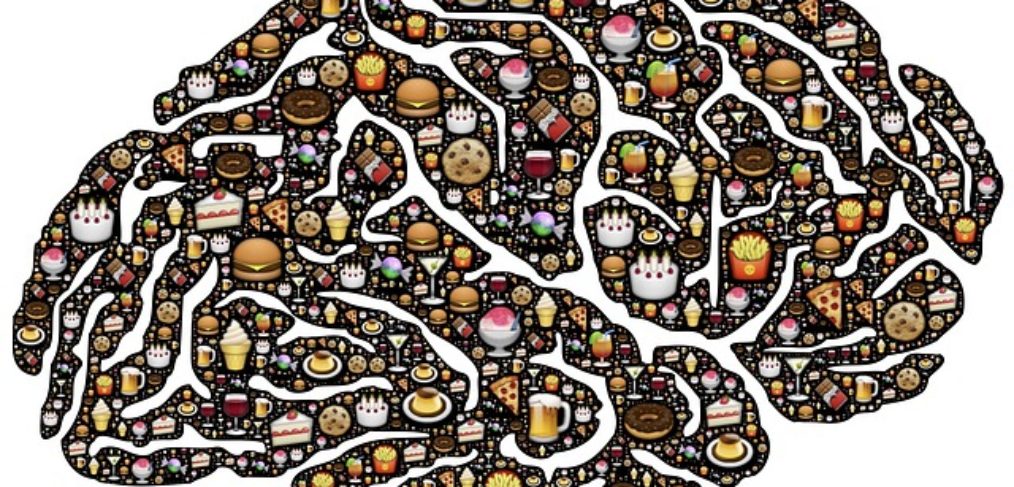
What you put in your stomach directly impacts how you think and how your learn. By enhancing your Diet Brain Connection, you can increase your concentration and memory. That’s because the foods you eat can increase or decrease brain fog, distractibility, depression and anxiety.

Too Many Refined Carbs Hurt the Brain

Your brain is an energy hog. It uses more energy than any other organ in the body. Taking up only 2% of your weight, it uses 20% of your fuel. So, if there’s a disruption in your fuel supply, the brain is going to feel it first, before other parts of your body. Sugary, low-fiber foods, and processed carbohydrates create a roller coaster effect on your blood sugars. First, they raise blood sugars well above normal. Then with an equal an opposite reaction, your blood sugars crash. As a result, you have a hard time thinking clearly. But there is an even more insidious problem than bouncing blood sugars.

Sweet & Processed Foods Inflame Your Gut

Crackers, chips, pasta, sandwiches, cookies, cakes, pastries, fruit snacks, fruit juice, soda and other convenience foods cause inflammation. But unfortunately, what happens in the gut does not stay in the gut.

Researcher Sarah Ballantyne explains that inflammatory cytokines (chemical messengers) produced in the gut in response to dietary stimuli travel through the bloodstream to every cell in the body. They cross the blood-brain barrier and activate brain cells that sustain inflammation. “An inflamed brain has fewer and slower nerve connections, which manifests as stress, depression, or anxiety,” she reports in her book, “The Paleo Approach.”

How Do I Enhance the Diet-Brain Connection?

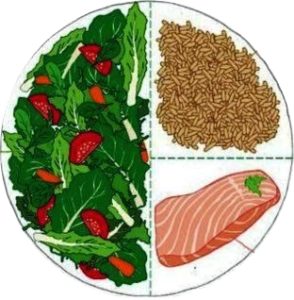
To avoid learning difficulties and prevent memory hiccups, the first preventative strategy is to balance macro-nutrients. Americans typically get 60-80% of their food in the form of refined carbohydrates. So you can swap white carbs for colored ones and increase the ratio of natural fats and high quality proteins in your meals. A good rule of thumb is to make half your plate vegetables, not more than 1/4 of your plate starchy carbs (such as grains or potatoes), and at least 1/4 of your plate protein.  Dress liberally with natural fats.

balanced macro-nutrients feed a healthy diet-brain connection

You can also make sure you are eating anti-inflammatory foods. The least inflammatory foods also happen to be the ones that are most nutrient rich. They include:

  • Berries, lemons, limes and papaya
  • Cruciferous vegetables: broccoli, cauliflower, cabbage, kale, and Brussels sprouts
  • Garlic, onions, leeks, shallots, and chives
  • Wild games such as duck, quail, pheasant, elk, bison, and deer
  • Wild-caught seafood, including salmon, herring, halibut, sardines, oysters, and anchovies

Smart Snacking Keeps Your Thinking Sharp

Keep your diet-brain connection strong by avoiding empty calorie foods between meals. If you must snack, try a boosting combo that pairs a nutrient-rich carbohydrate with a natural fat. Here are a few ideas:

  • Bell peppers and olives
  • Dates and goat cheese
  • Fruits and nuts
  • Snap peas and tahini
  • Grape tomatoes and hard-boiled egg
  • Celery and sunflower seeds

For more ideas on taming brain inflammation, check out our free inflammation e-guide!