September 2018

Oatmeal for breakfast

Oatmeal for Breakfast

Are you in the “Oatmeal for Breakfast” crowd? That’s the camp that believes whole grains are the best way to start the day. If you are, you have the backing of the American Diabetes Association. But perhaps you side with the keto bunch and prefer eggs or sausage. So which, really, is the best way to eat in the morning?

Consider Your Unique Biological Needs

First of all, let’s be clear that there is no one-size-fits-all diet. Whether you are male or female, old or young, active or sedentary impacts your dietary needs.  But that’s not all. I had a client who became very sick on a high-protein, high-fat diet because she couldn’t digest the food well. On the other hand, I have seen individuals with chronic inflammation because of their high-carb diet.

I know a healthy man who eats oatmeal for breakfast 365 days a year. However, I also know a woman whose blood sugars spike like crazy when she eats oatmeal. The more you become educated about your own body, the more you can tailor your breakfast to your health goals. Lab tests can be an important part of assessing your needs.

Strive for Balance

Excess is not healthy for anyone. Individual foods have both strengths and weaknesses. Spinach is high in iron and calcium, but it can’t give you thiamine or B-12. So you should aim for lots of variety in your meals.

Also, recognize that you need all three macronutrients: carbohydrate, fat, and protein. Build meals that do not favor one macronutrient too heavily. Oatmeal  is 70% carbohydrate. If you add sugar and fruit to it, you are increasing the potential for a blood sugar surge. In two hours, this could drop you into a hypoglycemic reaction, causing you to need more fuel fast. Then you will be driven to eat more carbs because fat and protein don’t enter the blood stream quickly enough. As a result, you create a blood sugar roller coaster.

oatmeal for breakfast can cause a blood sugar roller coaster

How to Eat Oatmeal for Breakfast

If you like oats to start your day, think like a pancreas. You want a slow, sustained energy burn that keeps blood sugars – and insulin levels – low and even.

Add protein or fat to your oatmeal for breakfast to keep blood sugars level.

Consider one of these balancing options:

  • Stir in some grass-fed butter or full-fat coconut milk.
  • Serve with a side of eggs or uncured, center-cut bacon.
  • Sprinkle in some protein powder just before serving.
  • Top with nuts and seeds.
  • Mix with almond butter
  • Add egg whites the last minute of cooking.


chubby cheeks are a clue to metabolic syndrome

Metabolic Syndrome and You

Metabolic Syndrome is possibly the most dangerous health condition you will encounter. Yet, you probably haven’t even heard of it. The real tragedy is that you can reverse it with just diet and lifestyle changes. But, uninformed, you will ask your doctor for prescriptions to treat your symptoms and will never solve the root cause.

What is Metabolic Syndrome?

This deadly imbalance of your metabolism shows up as a trio of problems. First, there’s weight gain – especially around the belly. Next, you notice  disturbing changes in your blood lipid profile. HDL’s begin to sink and LDL’s rise. Triglycerides climb alarmingly! Finally, your blood pressure begins to creep up. But these are just the telltale signs of Metabolic Syndrome. It is, in fact, a result of making too much insulin all the time.

Insulin is necessary. You can’t live without insulin. But when you have an excess, you store fat not burn it. Also, you make more triglycerides than you should. Your body creates smaller, denser LDL particles, which are the most treacherous kind, promoting to arterial plaque. Lastly, with higher insulin levels, your blood vessels constrict more, driving up blood pressure.

Metabolic Syndrome, called MetS, is your clue that your insulin has been elevated long enough, that your own cells are turning it away. Insulin can no longer keep blood sugars low. So your body makes even more of it in an effort to get the job done.

Why is Metabolic Syndrome Dangerous?

This cluster of abnormalities is a clear predictor of the top killers in America: stroke, heart disease, and diabetes. But because it is really a disease of insulin, it also puts you at risk for fatty liver disease, cancer, and Alzheimer’s. Less threatening perhaps, you become a candidate for obesity, infertility, PCOS, and certain autoimmune conditions, too.

You may think there’s not much harm in a little extra weight, or a blood lipid test that’s just above normal. In reality, your body is sending you a red flag that your metabolism has changed. You are like a ship with a gaping hole in the side. If you do not fix the hole, your ship will lean off balance more and more, until finally it cannot keep itself up!

Do You Have Metabolic Syndrome?

Check this list for clues to Metabolic Syndrome. A doctor will diagnose you with MetS is you have three of these signs.

  • Measure your waist at the belly button and at your hips around the widest point. Your waist measurement should not be greater than your hip measurement.
  • Request a cholesterol density test. You should have large, fluffy particles, not small, dense ones.
  • Know your blood lipid results. Expect triglycerides less than 100 and HDL’s greater than 50.
  • Calculate your the ratio of triglycerides to HDL’s. It should be less than 4.
  • Order a fasting insulin test. Look for a result of 5 or below. Many online labs offer this test for less than $50.
  • Check your hemoglobin A1c, which measures blood sugar over the last 6 weeks. If should be less than 5.7

Reverse Metabolic Syndrome

The first and foremost thing you have to do is prevent insulin surges. Since you produce insulin when your blood sugars rise, take these actions to keep blood sugars low:

  • Eat SLOW carbs. These are plant foods that enter the blood stream slowly because they contain lots of fiber and complex starches. Steel cut oats, asparagus, and lentils are some examples. They do not contain an abundance of simple sugars, like FAST carbs. Fruit juice, table sugar, and white bread are examples of foods that raise blood sugar rapidly.
  • Eat good quality protein, fibrous non-starchy vegetables,and unrefined fats with your meal. These will slow digestion and keep carbohydrates from entering the bloodstream too quickly.
  • Keep your carbohydrates less than 50% of your calories. No matter how clean you eat, if your meal is predominantly carbs, you will still produce insulin.
  • Practice stress-management techniques throughout the day. Stress can raise blood sugars even more than a high-carb meal. No one can avoid stress, but you can take steps to lower it.
  • Make a point to get 8 hours of sleep per night. You body produces cortisol to raise blood sugars when you are tired. A poor night’s sleep and flagging energy can also instigate sugar cravings.

Of course, if you need nutrition counseling or help with nutrient deficiencies, you can work with me.

Tips for Healthy Dining

Guide to Healthy Restaurant Dining

Here are 5 ways to make healthy choices when you eat out.

Visit a Local Health Food Venue

These small, independently-owned establishments specialize in farm-to-table offerings. They pride themselves on whole, unprocessed, simple food. You are likely to find keto, vegan, and gluten-free options, as well as local, homemade dishes.

Choose a Chain that Touts Fresh, Organic Ingredients

They may be fast food, but it’s fast food with an emphasis on natural foods. If you opt for a salad, bowl, or soup, rather than a sandwich, and add extra vegetables, you’ll be getting the best possible combination.

Go for the Salad Bar

It’s a great idea to fill half your plate with vegetables, then add a high quality, lean protein on the side, such as fresh trout. Watch those carbohydrates, and select fibrous, colored options. For example, pick sweet potato cubes instead of rolls, or quinoa instead of mashed potatoes.

Try Ethnic Food

Cultures with a rich food history usually incorporate many antioxidant ingredients in their traditional dishes. Use these guidelines to stay on track:

  • Thai – go crazy for coconut to cool inflammation.
  • Asian – choose steamed or stir-fried vegetables and request the sauce on the side.
  • Indian – order anti-oxidant curries laced with turmeric, cumin, and ginger.
  • Mexican – say yes to salsa, guacamole and seafood!
  • Greek – load up on tomatoes, cucumbers, eggplant, and spinach. Opt for grass-fed lamb.

Be Mindful

Wherever you eat, watch portions, sip water with lemon instead of soda, avoid fried foods and sauces, and pass on the dessert.

Meat and veggies for grilled customizable meals

5 Customizable Meals

With these quick meal templates, you can modify your meal according to your budget, time, and tastes. So, you will have delicious meals and optimal nutrition! Further, you can choose your meal to fit  your mood, and tailor it to the seasonal foods available. Now, you can have healthy customizable meals anytime!

Customizable Meals in a Salad Bowl

marinated chicken and vegetables for customizable meals

Ingredients

8 oz. any cooked protein, cubed
2 c. any raw vegetables, chopped
1 Tb. any fresh herbs, minced
3 Tb. vinegar, any flavor
2 Tb. any unrefined, cold-pressed liquid oil
1 tsp. prepared mustard, any type
1 clove garlic
salt to taste
2 c. salad greens, any variety
1 c. cooked grain or legume

Instructions

In a large bowl, toss together the protein, raw vegetables and fresh herbs. Next, whisk together the vinegar, salad oil, mustard, and garlic. Pour dressing over meat and vegetable mixture. Marinate at least 1 hour, and up to 48 hours. To serve, place greens in serving bowls. Then, add grain. Finally, top with the marinated mix.

Variation: Omit the grain or legume and serve in a tortillas or pitas.

Customizable Meals In a Soup Pot

soup ingredients for customizable meals

Ingredients

3 Tb. coconut oil, pastured lard, red palm oil, tallow, or ghee
1 onion, chopped
3-4 cloves garlic, minced
1 quart bone broth
12 oz. beef, pork, organ meat, seafood, poultry or tempeh
2-3 c. starchy vegetable OR 1 c. whole grain or legumes
Abundant greens –cabbage, kale, spinach, chard, bokchoy, etc.
Up to 4 c. additional vegetables: green beans, asparagus, broccoli, cauliflower, eggplant, zucchini…
salt to taste

Instructions

First, sauté the onion in fat until translucent. Second, add the onion to the remaining ingredients in a crock pot or large soup pot. Third, simmer until food is tender. Lastly, season according to one of the variations below.

Mexican: Add tomato, cumin and chilis. Serve with avocado and lime.
Indian: Spice with cinnamon, coriander, cumin, ginger, and turmeric. Serve with cilantro.
Italian: Stir in basil, oregano, rosemary, thyme & fennel. Use tomatoes generously.
Thai: Season with ginger, lemongrass, fish sauce and lime. Serve with coconut milk.
Garden: Use any fresh herbs, such as dill, savory, thyme, parsley, or marjoram.

Customizable Meals In A Skillet
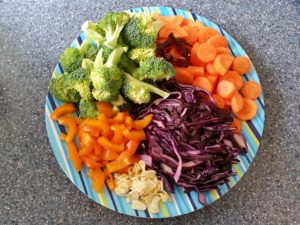
stir-fry vegetables for customizable meals

Ingredients

2 Tb. temperature-stable cooking oil
1/2 lb. cubed raw protein
1 onion, sliced
2-4 c. cut vegetables, fresh or frozen
1 c. chopped tomatoes
½ tsp. each cumin, coriander, turmeric and ginger
salt to taste
1 c. grain: rice, millet, buckwheat, quinoa…
2 c. bone broth

Instructions

In a large skillet, sauté the protein, and onion in the cooking fat. When the onion is translucent and protein is browned, add the tomatoes, spices, grain, and broth. As the final step, cover, reduce heat, and simmer until liquid is absorbed and grain is tender, 20-30 minutes.

Variation 1: For quicker meal prep, cook the grain in the broth beforehand. Store it in the fridge or freezer until needed. Then, stir-fry the rest of the meal while the grain is warming in the microwave. Serve the stir-fry on top of the rice.

Variation 2: For a more southwestern flavor, substitute chili powder, paprika, and red pepper flakes for the coriander, turmeric and ginger.

Customizable Meals Roasted or Grilled

grilled veggie and meat skewers for customizable meals

Ingredients

1 lb. pork, beef, poultry, fish
2 Tb. coconut oil, avocado oil, ghee, tallow, or pastured lard
1 onion, chopped
Several cloves garlic, minced
2 c. root vegetables (carrots, potatoes, turnips, rutabaga, beets, parsnips)
2 c. non-starchy vegetables (green beans, asparagus, broccoli, cauliflower, Brussels sprouts, mushrooms, peppers, celery)
1 Tb. Italian seasoning OR chili, cumin and paprika
salt & pepper to taste
1 Tb. balsamic, red wine or apple cider vinegar

Instructions

Cube the meat and chop the vegetables. Then, toss these together with the cooking fat and place in a roaster pan or on skewers. Before cooking, season generously. Grill or roast in a 450°oven for 20-25 minutes, turning halfway through. When meat is cooked and vegetables are tender, remove from heat and sprinkle with vinegar.

Customizable Meals in a Slow Cooker

mushrooms and peppers for customizable meals

Ingredients

4 c. firm vegetable peeled and sliced (eggplant, turnips, celeriac, rutabaga, yam, squash…)
1 lb. beef, poultry, pork, seafood or tempeh
8 oz. tomato paste
2 c. bone broth
1 tsp. each dried rosemary, oregano, thyme, garlic powder, onion powder and salt
1/2 c. fresh basil, packed
2 c. additional vegetables (carrot, celery, bell peppers, spinach, zucchini, mushrooms…)

Instructions

Spread the 4 c. sliced vegetable evenly on the bottom of your crock pot. Next, lay the protein on top of the sliced vegetable. In a bowl or blender, whisk the tomato paste, broth and seasonings together. Then, chop the basil and mix into the sauce along with the 2 c. additional vegetables. Finally, pour the sauce over the meat. Cook on low for 4-6 hours

Variation: Add 1/4 lb. grated frozen liver to the sauce before pouring over the meat and vegetables.

More Customizable Meals

If you liked these recipes, find others like them in our Balanced Bowl Cookbook.

Skin tags are a sign of insulin resistance.

Insulin Grows “Funny Things”

“First you grow up, then you grow out, then you grow funny things!” That’s what my sister said to me when I observed an odd bump on her skin below her chin. She pretended to be a toad, and we all laughed. Now, I am haunted. If only we had recognized the weight gain and the skin tags as signs of insulin resistance.

I wish we had known that what heart disease, cancer, diabetes, and other chronic diseases have in common is insulin resistance. What hope it would have given us to understand that insulin resistance can be reversed. My sister might have taken a second look at her diet. She might have made changes before the doctor found leukemia. She might have lived past 65.

It’s easy to think that diet choices don’t make a big difference in our health. One Pepsi, or one more cookie don’t matter that much. So, one pop becomes a pattern and one cookie becomes a chronic splurge. The frog is swimming in the proverbial pot and the water is hot. He is getting cooked, but he doesn’t even know it.

You cannot eat modern foods and avoid modern disease!

The first step back to better health is awareness. Please wake up to the fact that insulin resistance is the most common disorder worldwide. Roughly half of the adults in the United States are insulin resistant! You are most likely insulin resistant if you have two or more of these symptoms:

  • a waist that bulges over your belt a little
  • difficulty losing weight
  • rising triglyceride levels
  • a high blood pressure reading
  • inability to free yourself from sugar cravings
  • chronic tiredness, especially after meals
  • facial hair or gestational diabetes (female) or low testosterone (male)

Why do these symptoms matter?

According to Dr. Ronald Rosedale, a forerunner in insulin research, insulin initiates the aging process. The higher your insulin, the more susceptible you are to diseases of aging. Your quality of life is at stake. You become a candidate for migraines, early Alzheimer’s, stroke, dementia, fatty liver disease, and even osteo arthritis. The symptoms of fatigue and weight gain are only markers for serious health issues.

How can you reverse insulin resistance?

To prevent or to reverse insulin resistance, you must avoid repeated spikes of insulin throughout the day. What triggers a rush of insulin? Rising blood sugars.

So, ask yourself what increases your blood sugars. If you answered food and stress, you’re right, but let’s qualify which foods cause blood sugars to rise.

Carbs get a bad rap, but not all carbohydrates are villains. If a carbohydrate converts to glucose more slowly, it will have less impact on blood glucose levels. Therefore, eat fibrous, nutrient dense options moderated with fat or protein – such as asparagus with butter. Avoid “quick” carbs, such as white flour and white sugar products. Certainly, don’t drink your calories. Beverages are one of the top causes of high insulin. Eat whole foods, as close to nature as possible. Real food rarely comes with a bar code.

Be proactive about managing your stress, too. Did you know that just one anxiety-causing incident can raise blood sugars 200-300 mg/dl? Gary Scheiner, author of Think Like a Pancreas, details how this happened to him not only with a flat tire on his way to work, but also with a thriller movie. So, take the time to decompress. I detail 50 ways you can do this in just a minute or two in my Stress Hacks course.

Be conscientious about sufficient sleep and regular exercise as well.  Weight training and interval training are both effective ways to improve insulin sensitivity.