
3 Ways to Ascertain Your Blood Sugar Levels and 5 Ways to Moderate Them

I run into a lot of people who don’t believe they have a blood sugar problem. It comes as a shock when the doc tells them they are hypoglycemic, insulin resistant, or worse yet, diabetic. These are hard conditions to correct once they have actualized. But they are easy to prevent!

You can know your risk without having to schedule a doctor visit. Start with this quiz:

  1. If I skip a meal:
    1. no big deal.
    2. I have a headache.
    3. I’m “HANGRY!”
  2. I have to eat:
    1. 2-3 times a day.
    2. 3-4 times a day.
    3. 5-6 times a day.
  3. My energy:
    1. is pretty consistent.
    2. varies from day to day.
    3. is like a roller coaster.
  4. After meals, I experience:
    1. no change in energy.
    2. relief.
    3. sleepiness.
  5. Between meals, I have:
    1. no specific cravings.
    2. afternoon cravings (for stimulants).
    3. LOTS of cravings!
  6. I sleep:
    1. very well.
    2. poorly; I wake and can’t get back to sleep.
    3. with difficulty; I can’t fall asleep.
  7. I awaken:
    1. refreshed.
    2. not feeling rested.
    3. in a fog; I can’t get going.
  8. During endurance exercise:
    1. I have great stamina and reserves.
    2. I need a stimulant.
    3. I hit a wall and crash.

Circle your answers and total your score. The higher your result, the greater your risk of blood sugar diseases.

But suppose the “tire looks flat, but you need a tire gauge to be sure.” That’s easy, too. You can test your blood sugar levels at home and order a simple lab test to check your cumulative blood sugar levels over a 3-month period.

Home “finger-prick” glucose meters are available at local drug stores. Some popular brands of these glucose monitors are One Touch, ReliOn, Accu-Chek, FreeStyle and Contour Next. Just put a drop of blood on a test strip, and within seconds, you’ll have a reading. There is cause for concern if you are higher than 95 when fasting or higher than 120 two hours after a meal.

An A1C is a blood test that measures your blood-sugar levels over the past quarter rather than just at the current moment. You can order this test for less than the cost of a visit to the doctor’s office. Go to www.ultawellness.com and search A1C. Select a lab near you, print the requisition, and drop in at your convenience for the blood draw. The confidential results are emailed back to you within the week.

A score below 5.7 is considered safe; 5.7-6.4 is classified as pre-diabetic; anything over 6.4 indicates diabetes.

The nitty-gritty part is changing the numbers if they’re higher than they should be. Here are my “quick and dirty” recommendations:

  • Eat more healthy fats. Always pair your carbohydrates with a good fat to slow the absorption of sugars into the bloodstream and to give your body a slow-burning fuel that will last for hours and hours without leaving you shaky and frantic. Unheated fish oils are the best source of essential Omega 3’s. Butter, tallow, and lard from pastured animals are safe saturated fats to use in cooking. Olive oil is a great mono-unsaturate to use for salad dressings and other cold applications. Coconut oil is a popular mid-chain fatty acid with many health benefits.
  • Drink water. Many times, the body’s thirst signals are mistaken for hunger cues. Instead of grabbing a [sweet] snack, grab a water bottle. Since pop and juice fuel sugar cravings and are actually de-hydrating (they USE water from the body to dilute them), avoid drinking them. If it is difficult for you to enjoy pure water, try stimulating your desire for it by adding a splash of citrus, a few drops of trace minerals or a pinch of natural sea salt.
  • Take a probiotic supplement and eat traditional cultured/fermented foods. Often, sugar cravings are driven by an overgrowth of pathological microbes in the gut. Using probiotics foods and capsules can help return the balance to your microbiome and lessen your cravings. You might try kefir, kombucha, sauerkraut, kimchi, or miso. Just make sure it has live cultures.
  • Use a liquid amino-acid supplement between meals to stave off cravings. The body can convert amino acids into fuel in a process called gluconeogenesis. When your body needs instant energy and you’re tempted to grab sugar to supply glucose, try putting a couple drops of amino acid supplement on your tongue instead.
  • Go cold-turkey. Read labels and cut all sugar completely out for 3 days. If you can do it for 72 hours, you can do it indefinitely, because the cravings subside after the first few days.
  • Book a consultation with me to find out where the particular imbalances in your body lie.

Believe me, your body will thank you! If millenia of humans could survive without refined sugar, you can too!
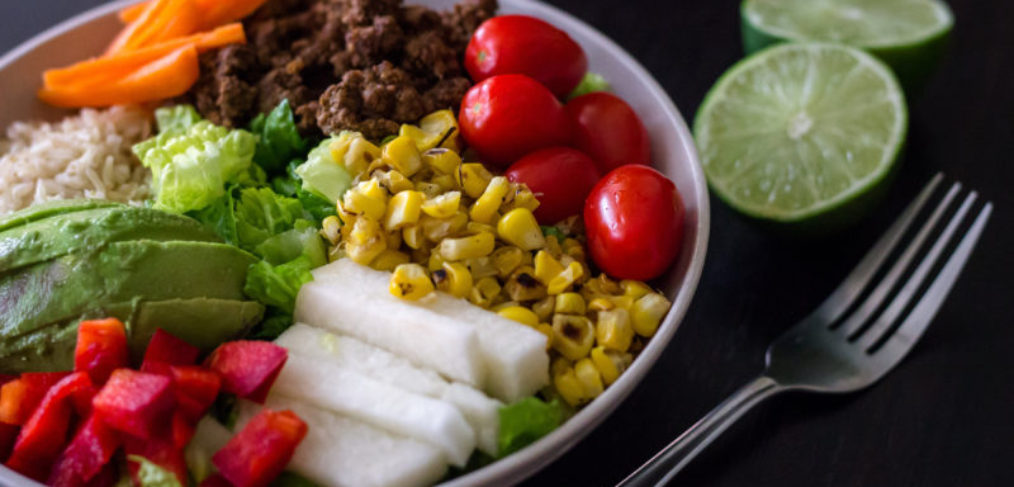
Bowl Meals

Versatility! Bowl meals suit your individual tastes and diet requirements while still appropriately balancing fats, carbs and proteins. Make them vegan, make them paleo, make them traditional… it matters not. You can be assured that your body is being nourished with power-packed ingredients geared to keep blood sugars stable while fueling you with the vitamins, minerals, and macronutrients you need to condition muscles, keep your brain sharp and focused, empower your heart, and stay ship-shape.

Start with a Starchy Base

  • No more than a cup of grain (rice, millet, quinoa, barley, etc.), legumes* (lentils or beans) OR starchy vegetable (potato, yam, beans, sweet potato, peas, etc.)

Smother in Leafy Greens

  • As much as you can eat of sprouts, micro-greens, spinach, romaine, kale, chard, cabbage, Brussels sprouts, arugula, bok choy, etc. – raw, or sautéed

Add a Protein Layer

  • 4 oz. beef, pork, fish, seafood, poultry or tempeh

Use an Abundance of vegetables

  • Radishes, bell peppers, jicama, cucumber, zucchini, snap peas, green beans, broccoli, cauliflower, beets, parsnips, carrots, green beans, mushrooms, etc.

Top with ONE Healthy  Fat

  • 1 Tb. of expeller-pressed oil*
  • 2 oz. nuts or seeds
  • 2 oz. cheese
  • ¼ c. avocado or olives

Be Generous with Extras:

  • Fermented veggies, kelp granules, nutritional yeast, apple cider vinegar* and/or fresh lemon/lime juice

*You can make a dressing with ¼ c. chickpeas, 1 clove garlic, 1 Tb. olive oil and 2 Tb. apple cider vinegar

Yoga for Insulin Resistance?

Stress eats up your energy reserves. Your body’s answer is to employ the hormone cortisol to keep you going through the crisis. Cortisol activates conversion of muscle tissue to glucose – keeping you fueled under fire. Chronic stress, therefore, means chronic high blood sugars, and constantly elevated blood sugars eventually means insulin resistance.

I’ve seen it more than once in my practice. You don’t eat junk food, you’re conscientious about whole food choices, and you still can’t manage your blood sugars. I’m telling you, it’s the stress.

Try some daily relaxation techniques to curb your cortisol output. Diaphragmatic breathing is a great place to start because the majority of the lung’s receptors for the parasympathetic (de-stressing) arm of the nervous system are in the lower third.

Lie on your back and put your hands on your abdomen below your naval. As you inhale, try to raise your core enough to move your hands upward. Now breathe out more slowly than you inhaled. Repeat this several times.

Enhance your practice by counting to 4 as you inhale, holding your breath to the count of 7, then exhaling for 8 counts. This odd ratio requires enough concentration to take your mind from its ruminating and also insures that you slow your breath. A sure sign of stress is accelerated breathing. Fully exhaling also helps remove toxins from the body.


Can’t Say No?

Refusing treats isn’t about willpower so much as it’s about brain chemistry, experts are saying. When cravings strike, chances are you’re deficient in healthy fats and proteins.

While the brain’s fuel is indeed glucose, its cells are primarily made of fatty acids and its neurotransmitters are built from amino acids. Julia Ross, MA, MFT, explains in this post that amino acids – obtained through the proteins we eat – are used to make brain repairs. Without the proper foods in the diet, the brain cannot correct the addictive signals, allowing cravings and emotional eating to continue unimpeded.

Further, high-carb meals feed a feast-or-famine cycle of blood sugar imbalances. On the upswing, when the body is deluged with a flood of glucose, brain cells are actually “glycated,” or sugar-coated, causing slow or foggy thinking and leading to pre-mature mental degeneration. On the other end of the pendulum swing, the brain is actually starved of its necessary fuel and sends a panic signal for more sugar. That’s when you reach for the M&M’s.

If you could keep blood sugars nice and steady all day, there would be no frenzy to grab that quick-carb snack to quell your energy demands . The key to maintaining level blood sugars is to eat plenty of healthy fats and an adequate serving of protein at breakfast time. Don’t skip meals and evenly balance your carb-fat-protein calories throughout the rest of the day.

Some individuals find that an amino acid supplement between meals can help them fight cravings and make it to the next meal without bingeing on sugar-y foods.