January 2020

Eating together raises oxytocin

Eat to Raise Oxytocin

Obsessing about de-stressing? Why not raise your love hormone, oxytocin, instead? Since stress is damaging to your health, you’re under pressure to live a more relaxed life. But isn’t relaxing under duress an oxymoron? However, science assures us that stress hormones come down when oxytocin rises, wouldn’t it be simpler to focus on the pleasurable task of raising oxytoxin?

What is Oxytocin?

You might say that oxytocin is commander-in-chief of your body’s parasympathetic nervous system response. This response is commonly called the rest-and-digest state, or the connection-relaxation state. Though many hormonal and nerve changes switch the body to this response from a sympathetic, or flight-or-flight state, oxytocin oversees the process. You see, oxytocin has many more hats to wear than just making sexual intercourse pleasurable and enabling mothers to birth and nurse their babies. It enhances bonding, appears to modulate fear, and has an anti-depressant effect.

Additionally, oxytocin can reduce anxiety, and lessen symptoms of withdrawal. Both men and women secrete oxytocin.

Signs You Might be Making Insufficient Oxytocin

Obviously, given the roles above, you might be low in oxytocin if:

  • You have trouble bonding.
  • You experience chronic depression, anxiety, or fears.
  • Sexual intercourse is mechanical and/or you have trouble achieving orgasm.
  • You crave addictive substances.

Here’s another sign that’s intriguing to me as a nutritional therapist: you crave sweet, high-carbohydrate foods. There is research that oxytocin counters cravings for sweets. But whether it does or not, this much is clear: stress does raise cravings for sweets. And too much of the stress hormone cortisol blunts oxytocin. So, it only stands to reason that raising oxytocin would diminish sugar cravings.

How Eating Can Raise Oxytocin

We know that social contact, looking in the eyes of loved ones, touch, warmth, and verbalizations of love and gratitude heighten oxytocin production. These factors all come together when you share a meal with family or friends.  But there’s more: you need certain nutrients to make oxytocin, so eating foods high in those factors can enhance your ability to manufacture and release oxytocin.

Here are three nutrients that are effective in optimizing your oxytocin levels:

  • Magnesium: This mineral has a dual function. It helps oxytocin receptors work properly, and it boosts oxytocin’s action. Because most Americans are clinically low in magnesium, you could struggle to have sufficient oxytocin due to mineral deficiency. The top foods for magnesium, believe it or not, are not bananas, although this fruit is #10 on the list. The best choices are spinach, pumpkin seeds, lima beans, tuna, and brown rice.
  • Vitamin C: Oxytocin depends on this vitamin as a co-factor in its synthesis. Vitamin C also seems to stimulate oxytocin secretion. Enhance your Vitamin C stores by eating plenty of acerola cherries, chili peppers, red and yellow bell peppers, guava, parsley, kale, broccoli, Brussels sprouts, lemons, and papayas.
  • Lactobacillus reuteri: This probiotic augments brain oxytocin. It is found in cultured foods, such as cheeses, yogurt, kefir, sauerkraut, and miso.

My Favorite Ways to Raise Oxytocin

I find it delightful to strive for an oxytocin boost! It’s much more satisfying than writing “manage stress” on my to-do list. Here are just a few of my most enjoyable ways to increase the love hormone.

  • Eat nutrient-rich, whole-food meals with my favorite people. I highly doubt that junk food will give me an oxytocin rush, so I leave processed, refined foods out of the equation.
  • Turn up the heat. Here are several cozy options I indulge in for warming my body: sit in a sauna, soak in some hot springs, place a heated compress on my neck and shoulders, and relax with a foot soak.
  • Listen to relaxing music. It’s even more beneficial to hum or sing along.
  • Engage in body work. I personally find acupuncture, massage, and yoga to be very pleasurable.
  • Notice the sights, scents, and sounds all around: the motion of the clouds, the chirping of birds, the smell of a pine boughs, the laughter of a child, the snapping of a campfire.
  • Engage in deep inhales & long exhales, using the diaphragm, not the chest.

Remember, stress can undermine even the cleanest diet. Contact me to learn more about reducing stress hormones and eating healthier.

Blueberries and cream is a smart snack to stabilize blood sugars

Smart Snacks

Smart snacks keep blood sugars stable, maintain level energy and moods, and provide vital nutrients. Usually, they come without an ingredient list. The best ones require no mixing or cooking. For the most part, you can eat them on the go.

Convenience Drives Foolish Snack Choices

Why are we even talking about smart snacks? Today’s convenience food industry has created products that are the nemesis of health. For example, beverages with high fructose corn syrup are damaging to your liver. Further, highly processed crackers, chips, and baked goods are high in calories and low in nutrients. They can cause your blood sugars to rise rapidly. Chronically high blood sugars contribute to insulin resistance and type 2 Diabetes. Also, packaged snacks with flavor enhancers, food coloring, and other chemical additives affect your mood negatively by altering your microbiome.

Smart Snacks Are Natural Foods

When you run into the grocery store to grab a quick bite, look for items that don’t come in a box, can, or bag. Think about food that existed more than a century ago. Envision going outside to pick it, dig it, milk it, or gather it. Food scientists have invented most of the harmful products on the market today in the last 50 to 100 years. If you can’t pronounce all the ingredients on the label and don’t know what half of them are, that’s your first clue that you don’t need them. After all, who cooks at home with sodium benzoate, BHA, propylene glycol, and azodicarbonamide?

Don’t Leave Out Healthy Fats

Most of today’s snack choices center on refined carbohydrates. Eating high quantities of processed carbohydrates is dangerous for your metabolic balance. Those snacks that do contain fats are made from highly inflammatory oils: soy, canola, cottonseed, safflower, and corn. But your cells – all 37 trillion of them – each need the right kind of fats in order to admit nutrients and expel wastes. Nuts, seeds, olives, avocados, coconuts and dairy products contain natural fats that benefit your health.

Smart Combinations to Snack on

Check out this list of snack pairings, then get creative designing your own. The key is to pair a fat or protein with a fruit, vegetable or whole grain carbohydrate.

  1. Smoked Salmon on multi-seed crackers
  2. Dates & cream cheese
  3. Hummus & baby carrots
  4. Peaches & Greek yogurt
  5. Snap Peas & tahini
  6. Olives & baby bell peppers
  7. Hard-boiled eggs & grape tomatoes
  8. Raspberries & ricotta cheese
  9. Celery & sunflower seed butter
  10. Red pears & cheddar
  11. Cottage cheese & cantaloupe
  12. Grapes & gouda cheese
  13. Avocado cubes & mandarin orange slices
  14. Tuna salad in cucumber “cups”
  15. Nut butter on brown rice cakes
  16. Broiled tomatoes slices with mozzarella
  17. Peel-&-eat shrimp with cocktail sauce
  18. Pistachios & strawberries
  19. Popcorn with butter & parmesan
  20. Sunflower & sesame seeds baked with honey (see recipe below)

Sunflower-Sesame Crisp

  • 1/2 c. sunflower seeds
  • 1/4 c. sesame seeds
  • 1 Tb. honey
  • 1 Tb. olive oil

Toss ingredients together and spread on a parchment-lined baking sheet. Roast in a preheated 400° oven for 6-8 minutes. Cool 10 minutes, break apart, and cool completely.

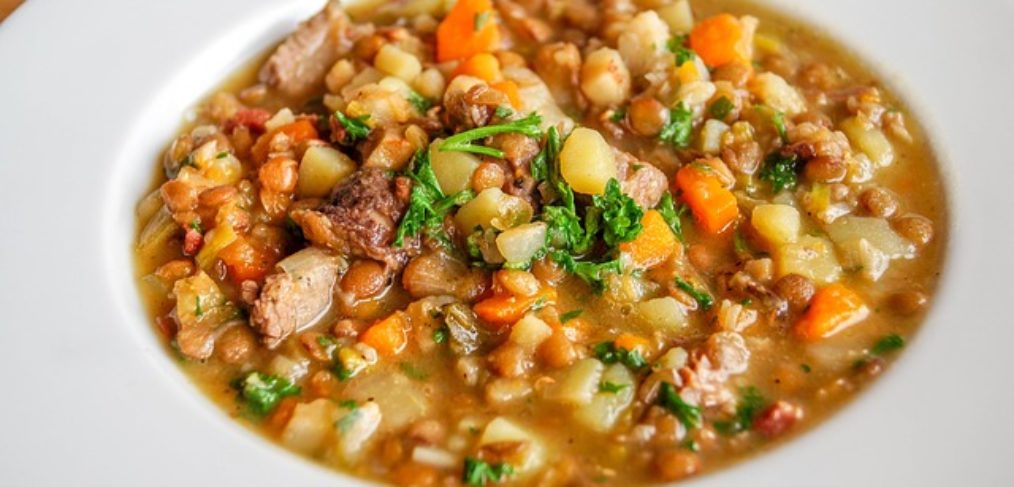
Immunity Soup made with lentils

Immunity Soup

Immunity Soup is engineered to deliver vital nutrients while providing a comforting winter meal. The immune system is a nutrient HOG! In order to keep it functioning well, we have to feed it a constant stream of vitamins, minerals, and antioxidants.

Benefits of Immunity Soup

We start with bone broth, because it’s rich in magnesium, potassium, zinc, selenium, and iron. To that, we add sautéed onion, which has sulphur compounds to help you detoxify. The onion is sautéed in coconut oil with some minced garlic, thyme leaves, and cumin seeds. These all have antimicrobial properties.

We know that zinc is crucial for immunity, so we use brown lentils as an abundant source of that mineral. Then for Vitamins A & C, which provide a shot of antioxidants, we chop some veggies. Rich colors alert us to the presence of antioxidants. We use tomatoes, parsley, celery, carrot, kale, cabbage, and chilies – green for mild, red for spicy.

To get an anti-inflammatory benefit, we add grated ginger root & grated turmeric root (or turmeric powder).To give the immune system a boost, we put in some chopped mushrooms and a couple of bay leaves. A final touch is to add some red wine vinegar, which supports your healthy gut microbiome in fending off pathogens.

Recipe

1 onion, chopped

2 Tb. coconut oil

3 cloves garlic, minced

1 tsp. cumin seeds

1 tsp. dried thyme or 1 sprig fresh thyme

4 c. bone broth

1 c. brown lentils

1 lb. ground grass-fed lamb, beef, or sausage, browned (optional)

2 stalks celery, chopped

3 carrots, sliced

1 bunch kale, chopped

4 c. cabbage, chopped

1/4 c. tomato paste or 4 tomatoes, cubed

1 Tb. dried parsley or 1/4 c. fresh parsley, chopped

2-3 chilies according to preference

1″ each of turmeric root and ginger root, grated (or 1/2 tsp. powder)

8 mushrooms, chopped

2 bay leaves

3 Tb. red wine vinegar

1 Tb. salt

Combine all ingredients in a stock pot, crock pot, or Instant Pot. Pressure for 20 minutes, or simmer for 30 minutes, or slow cook for 4 hours.


Linking Insomnia, Anxiety, and Indigestion

What do insomnia, anxiety, and indigestion have in common? That may depend on your own physiological uniqueness. But for many individuals with these 3 complaints, chronic cortisol is the link.

What is cortisol and how is it made?

When your brain perceives a threat – either from within or from without – it needs a messenger to spread the alarm and get the body ready for action. So, the hypothalamus stimulates the pituitary to trigger the adrenals to make cortisol from cholesterol.

You might mistakenly believe that cortisol is the enemy. Many call it The Stress Hormone and give it a bad rap. But what many people don’t realize is that cortisol is critical for you to wake up, focus, set goals, meet your deadlines, and even exercise. That’s because it rouses you out of your resting/healing state. It does that by increasing blood pressure and heart rate and raising blood sugars to that you can have energy to mobilize – whether that be dancing, debating, or dodging a bullet!

The problem is that when cortisol output becomes chronic, your body never gets to rest and digest and heal. That’s when you begin to see health issues.

Why do so many people have chronically high cortisol levels?

First, this is a go-go-go world of ongoing crises from sun-up to sundown, with alarms, alerts, and emergencies all clamoring for your attention. Urgencies control your focus. Your body responds intelligently by producing the hormone that will help you meet those demands. Unless you deliberately choose to slow down, shut down, and turn off, your body will continue to produce cortisol day and night.

Second, 60 to 80% of the American diet is refined carbohydrate, everything from Rice Krispies to Wonder Bread, and from French fries to pasta. And that’s not counting chips, candy, or pop! When you eat like that, your body needs cortisol to come to the rescue. Think of it like this:

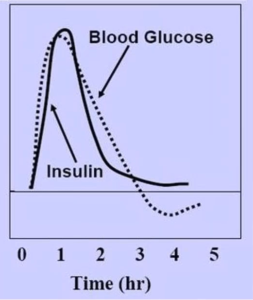
What happens after I toss a bowling ball 10 feet in the air? Of course! It comes crashing down! Well, blood sugars are the proverbial bowling ball. You launch them into the air by loading up on meals and snacks that are not balanced with appropriate proteins and fats. The laws of nature say that for every action, there is an equal and opposite reaction. So, inevitably, blood sugars plummet!

A blood sugar dip may contribute to insomnia, anxiety, and indigestion

Your brain can’t tolerate that. It must be guaranteed a constant supply of glucose in order to direct the minute-by-minute management of all your body functions. So, it declares an emergency, and the hypothalamus signals the pituitary to trigger the adrenals to release cortisol to raise blood sugars back up.  Cortisol alerts the muscles and the liver to release stored glucose for immediate energy. In effect, when you grab a doughnut, a Kit Kat, or a Pepsi, you stress your body into fight-or-flight.

How does cortisol instigate insomnia, anxiety, and indigestion?

Your body is smart. It knows how to put first things first. If you have a battle to fight, it will energize your muscles, increase your blood flow, and sharpen your vision. But…it will also shut down digestion and keep you alert so you don’t drift into slumber easily. After all, those things are a lower priority than simply surviving! Therefore, people with chronically high cortisol often notice symptoms such as heartburn, bloat, anxiety, and insomnia.

How can you reduce insomnia, anxiety, and indigestion?

Start in the morning by building a slow-burning, enduring metabolic fire. You prevent a cortisol spike by avoiding a blood sugar trough. Figuratively speaking, you have to put coal in your steam engine. What would happen if you tried to run a steam engine train with a pile of newspapers? It wouldn’t work! The train would get 2 feet down the track and stop.

Fruit juices, cereal, white flours, and sweeteners are like newspapers. They burn hot and fast, and extinguish quickly. They don’t power you for the long haul. “Coal” comes from healthy fats such as nuts, seeds, butter, coconut oil, olives, and avocados.

That might mean adding Greek yogurt to your oatmeal, putting an avocado in your green smoothie, eating a couple of eggs with your toast or having a sausage patty with your hash browns. Please, please, please don’t grab a bowl of cereal with skin milk, or run out the door with a granola bar!

Next, when you grab a snack, pair a healthy fat with a high-fiber fruit or vegetable. For example, you might eat hummus and carrots, cottage cheese and peaches, coconut milk and blueberries, olives and baby bell peppers, almond butter and apples, or guacamole and mango.

While there are many factors that contribute to insomnia, anxiety, and indigestion, stabilizing cortisol output with balanced eating can improve these complaints dramatically.

Breakfast soup of broth, chicken, and vegetables

Breakfast Soups

What if, instead of cereal, you had soup for breakfast? It might sound odd in America, but all over the world, healthy cultures feast on breakfast soup several times per week.

Historical Bias for Breakfast Soup

There’s an old saying: “Breakfast like a king; lunch like a prince; dinner like a pauper.”  In blue zones – 5 places around the world where people consistently live over 100 years old – breakfast looks more like dinner. In most cases, the first meal of the day consists of protein, plant-based fats (nuts, seeds, oils), and beans or vegetables.

Many Japanese eat Sumo Stew first thing in the morning is normal. Also, Nigerians often enjoy Egg Stew, Chinese slurp Congee (rice porridge with egg and meat), and Columbians have their Changua (milk soup with poached eggs). From Mohinga (fish & noodle soup) in Burma to Lablabi (chickpea soup) in Tunisia, people around the globe have been eating soup for breakfast forever. And let’s not forget Vietnamese Pho, or Indian Ginger Rasam (lentil soup).

Yet, according to a survey that Kellogg’s conducted, only 34% of adult Americans eat breakfast at all.

Advantages of Soup for Breakfast

Here’s how soup beats cereal for your morning meal:

First, it stabilizes your blood sugars. Steaming broths rich in amino acids, and vegetables in healthy fats help insure you don’t have an insulin spike today. Add to that protein-rich meats and legumes, and you have a true winner.

Second, those who eat a hearty meal in the morning are more likely to lose weight. One study followed two groups of people who ate the same number of calories, but distributed them differently throughout the day. This first group ate more calories at breakfast, while the second group ate more calories at dinner. The group that consumed the larger breakfast lost 2.5 times more weight than the the group that ate a larger dinner group. Additionally, the first group lost four more inches around the waist. ”What we have seen is that people on diets with the same number of calories who front-load calories to the earlier part of the day fare better in terms of subjective and objective measures of satiety,” researchers said.

Further, those who eat like a king at breakfast are more likely to have a lower body mass index (BMI). “Studies have found that although people who skip breakfast eat slightly fewer calories during the day, they tend to have higher body mass index, or BMI,” says Christy C. Tangney, PhD, a clinical dietitian at Rush University Medical Center and an expert on the effects of diet and nutrition on heart health.

Finally, an ample breakfast encourages a vigorous metabolism. When you eat well in the morning, you’re telling your body that there are plenty of calories available for the day. When you skimp on breakfast, the message you send your body is that it needs to conserve rather than burn any incoming calories.

Recipes

Not sure you want to eat international fare? Here are some American recipes that will give you the same benefits that cultures around the world enjoy.

Butternut Soup

This recipe comes from Mickey Trescott at AutoimmuneWellness.com.

  • 1 tablespoon solid cooking fat
  • 1 onion, chopped
  • 4 cloves garlic, minced
  • 1 tablespoon minced fresh rosemary
  • 3 cups water
  • 4 lbs. whole chicken
  • 1 small butternut squash, peeled, de-seeded, and cubed
  • 1 teaspoon sea salt
  • 5 cups baby spinach
  • ½ lemon, juiced
  1. Place the solid cooking fat in the bottom of your Instant Pot and select the “saute” function. When the fat has melted and the pot is hot, add the onion, and cook, stirring, until translucent and lightly browned, about six minutes. Add the garlic and rosemary and cook for another 30 seconds, until aromatic.
  2. Put the water into the pot and turn off the heat. Add the chicken, squash, and sea salt to the pot. Lock the lid, and set your machine to pressure cook on the manual “high” setting for 16 minutes.
  3. When the machine indicates the dish is finished cooking, immediately place a towel over the steam valve, carefully opening with the use of a wooden spoon (careful — you can burn yourself easily here!) to quick-release the pressure. Once the steam is released, remove the lid, and allow to cool.
  4. Once the dish has cooled enough, remove the whole chicken from the pot, take off the meat, and place back in the pot with the spinach and lemon juice. Place back into the Instant Pot container to heat to temperature, and enjoy!
  5. If you are going to be portioning this soup into jars for storage in the freezer, allow it to cool completely and spend 24 hours in the refrigerator before doing so — the soup will have a better flavor when you reheat it!

Sausage and Sweet Potato Soup

  • 1 tablespoon coconut oil
  • 1 onion, chopped
  • 3 cloves garlic, minced
  • 1 tablespoon minced fresh parsley
  • 3 cups bone broth
  • 1 lb. ground sausage, browned
  • 2 cups diced raw sweet potato
  • 1 teaspoon sea salt
  • 1/2 tsp. nutmeg
  • 3 cups kale, chopped
  1. Saute the onion and garlic in coconut oil until translucent.
  2. Put all ingredients except kale in a crock pot or soup pot and simmer until sweet potato is tender (20 minutes on stovetop, 2-3 hours in a crock pot).
  3. Add the kale and cook 2-3 minutes more, just until kale is wilted.