Why Does Stress Make Me Crave?

Stress. Even the word itself sounds, er, uh…stressful! You immediately conjure images of family quarrels, financial problems, road emergencies, sleep deprivation, a difficult boss, or life-sucking disease. But no matter the source, stress is a voracious monster that has a lust for only one victim: Energy. To mobilize…to escape… to ward off danger…to survive.

And whose job is it to supply the sacrificial lamb to this beast? The adrenals, those tiny glands atop the kidneys, best known for their production of adrenaline and cortisol. Instantly, they send out their fleet-footed messengers to recruit fuel for the energy factories in the body – those tiny mitochondria inside each cell. They sound the alarm for oxygen and food to be delivered promptly.

The bronchioles in the lungs dilate, the pulse quickens, all the better to ferry the goods to their destination. Digestion, reproduction, and other “non-essential” functions grind to a halt. All attention must be focused on responding to the demon’s demand.

The couriers dash to the liver to scrape up all the glycogen stores that can be converted to glucose – the quickest food that can be lapped up in such an emergency. They race to the muscle tissue to coax fatty acid and amino acid conversion into glucose. But inevitably, they sprint to the brain, where the commander-in-chief demands that rations be confiscated from outside the camp.  You receive an unquestionable order: Eat! Eat now! Eat quick!

No long-burning logs will stoke the fire soon enough. You need kindling! Intuitively, you seek carbohydrates that can be transformed into glucose rapidly. A fiber-ful bundle of buttered asparagus doesn’t quite pass muster. But ice cream – now, that sounds fine!

Two Keys to Kill Your Cravings

Outwitting your cravings will require clever strategy. Implement these assertive tactics:

  • Fight the stress itself! Instead of letting urgent bids take your attention, re-focus on the moment. Ascertain that you are actually okay – you are alive and functioning – then reprogram your breathing, your mindset, and your sensory input through deliberate, mindful exercises. (Check out our Stress Hacks class.) You can choose to respond from a place of peace.
  • Fuel up before the energy crisis. Having adequate amino acids from healthy protein, and plentiful fatty acids from natural, unrefined fats will guard against energy deficits. Make sure, especially, that your first meal of the day will meet your metabolic needs. It has been suggested that no less than 20 grams of protein are needed in the morning to establish your metabolism for the day. So if you want waffles or cereal, save them for dinner. Instead, try some Fisherman’s Eggs for breakfast! Rich in Omega 3’s, this dish is protective of those energy factories, your mitochondria.

Fisherman’s Eggs

2 Tb. coconut oil or unrefined red palm oil

1/2 onion, chopped

2 cloves garlic, minced

1 package of frozen vegetables, optional (or any fresh ones, such as bell peppers, artichoke hearts, or asparagus)

1 can wild-caught sardines packed in olive oil

2 pastured eggs

Preheat oven to 350°. Using an oven-proof skillet, saute the onion, garlic and optional vegetables over medium heat in oil until soft. Add sardines to the pan. Gently crack the eggs over the mixture. Transfer skillet to the oven and cook until the eggs are soft-set, approximately 10 minutes.

A Little Indulgence

Boycotting refined flour and sugar doesn’t mean you must live a spartan life! Being healthy certainly includes joyful connection with family and friends over delicious and nourishing food. Why not replace low quality treats with something better? Deprivation only instills resentment and drives cravings.

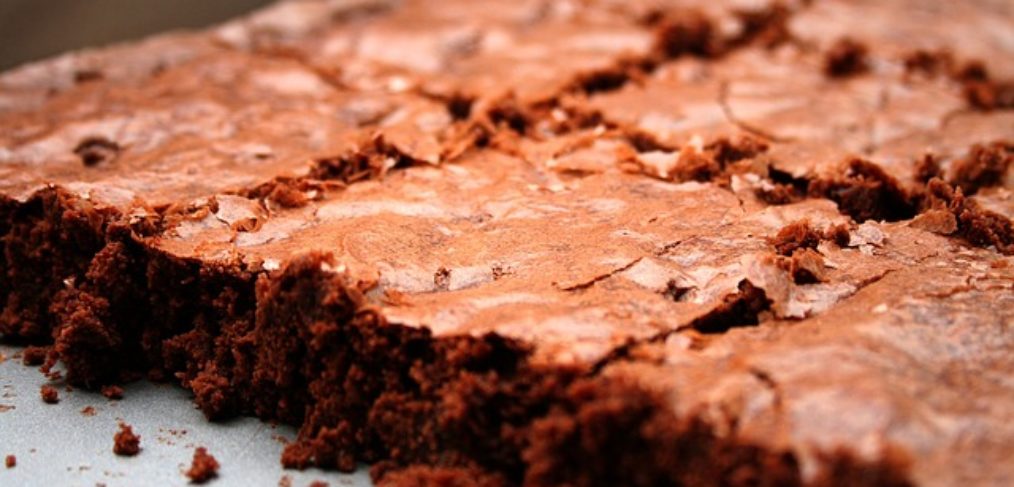
Since brownies were once my downfall – the food that triggered my bingeing and was the gateway to my sugar addiction – I have chosen to give them a healthy makeover. Enjoy!

Ingredients

1/2 c. yam or sweet potato, cooked and mashed

1 c. almond, cashew, sesame, or sunflower seed butter

1/2 tsp. salt

1/4 tsp. cinnamon

1 egg

1/4 c. pure maple syrup or honey

1/2 c. cocoa or carob powder (I find carob less bitter)

1 tsp. vanilla


Beat the yam, nut/seed butter, salt, and cinnamon together until smooth. Add the egg, syrup, cocoa powder, and vanilla. Mix well, until batter is evenly colored and no lumps remain. Scoop into a sprayed or greased 9×9″ pan. Bake at 350° for 20-25 minutes. Don’t eat the whole pan!

Can’t Sleep? Check Blood Sugars

The more erratic your blood sugars, the less you sleep, and the less you sleep, the higher your blood glucose goes. So being healthy depends on establishing both level blood sugars and restorative sleep.

How Poor Sleep Raises Blood Sugars

Sleep deprivation is a form of stress. Stress is another way of saying “energy demand.” There has to be fuel to supply that demand. So certain hormones, including cortisol, signal the body to release glucose from stores.  Naturally, the higher the stress, the greater the release of glucose.

But there’s another problem. The less you sleep, the less able you are to metabolize, or use, the glucose that is being released. So of course blood sugars escalate!

How Erratic Blood Sugars Disrupt Sleep

It doesn’t matter which comes first: the sleep loss or the blood sugar changes. Just like chicken and egg, one begets the other continuously.

Remember that cortisol is released when the body is stressed? Not only does cortisol raise blood sugars to fuel the energy need, it wakes you up! Cortisol is a mobilization hormone. It competes with melatonin, your sleep hormone. In teeter-totter fashion, when one rises, the other falls.

To aggravate the situation, when your blood sugars are too high, your kidneys will try to remove some of the glucose via urine. So, you wake up to use the bathroom. You may also wake up because you feel hot, thirsty or irritable – other side effects of high blood sugar.

You know that high blood sugars directly correlate with high insulin. But did you know that insulin is a trigger for the “fight or flight” response? So having a meal during the day that precipitates an insulin surge will keep you from sleeping tonight. When that happens repeatedly, you become insulin resistant. Insulin resistance can affect the liver, rocketing blood sugars even more. Normally, your liver supplies your with just the right amount of glucose to keep you functioning in your sleep. If your liver has become insulin resistant, it makes too much glucose, provoking even greater blood sugar imbalance.

On the other hand, you also lose zzzzz’s if your blood sugars drop too low. Why? Hormones again. Cortisol, as well as adrenaline and glucagon, tell the body to eat, not sleep, because energy stores are waning. Adrenaline quickens your pulse and breathing. It takes you from “rest and repose” to “rally and run.”

How to Assure a Healthy Balance

So what are you to do about this vicious spiral? Love your hormones! Honor melatonin by following circadian rhythms. Reduce adrenaline and cortisol with nightly relaxation practices. And by all means, eat balanced ratios of carbs, fats, and proteins to avoid glucose and insulin surges! Here are some specific suggestions:

  • Wake up with the sun. Minimize artificial light, especially in the evening. Special blue-light blocking glasses can be helpful if you have to function after dark.
  • Try aromatherapy, music therapy, pet therapy, or any other calming practice to shift out of sympathetic state at the end of the day.
  • Eat whole food meals and avoid snacking. Stay away from refined and processed foods, limit starches and flours, increase vegetable portions, and until sleep normalizes, boost your protein consumption.

If you need further help with your sleep, contact me about supplements and strategies for your individual physiology.

Reverse Insulin Resistance to Control Cravings

Trying to control sugar cravings without addressing insulin resistance is like learning to swim without getting in the water: you’re only going through the motions, not developing any lasting change.

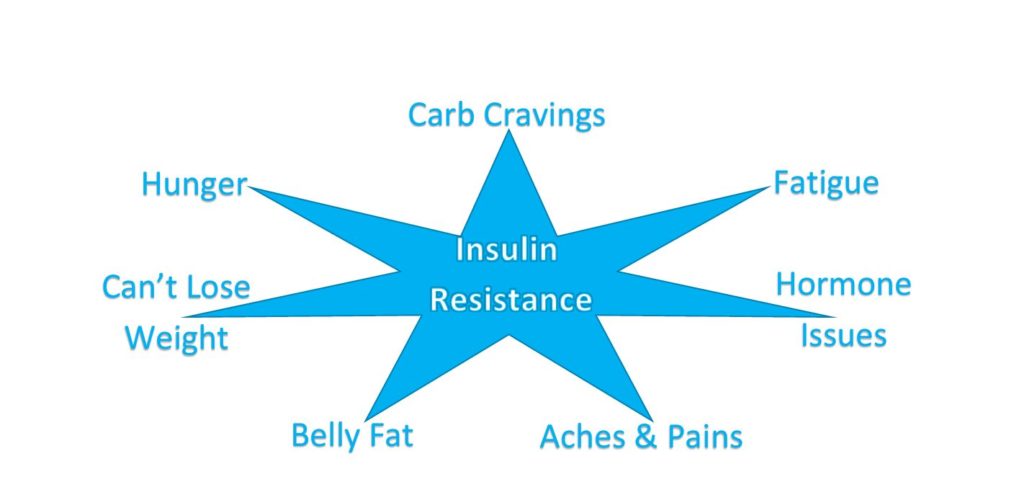
Because insulin resistance instigates carb and sugar cravings, it is pointless to try to curb these cravings until you correct the insulin resistance – which develops after years of poor eating habits. Signs and symptoms of insulin resistance include:

  • fatigue
  • hunger
  • hormone imbalances that contribute to
    • PMS, PCOS, and facial hair in women
    • thinning hair, “man boobs,” and erectile dysfunction in men
    • low thyroid
    • infertility
  • inability to lose weight
  • abdominal fat
  • migrating aches and pains
  • desire for sweets after a meal
  • rising cholesterol and triglycerides

Five Steps To Reverse Insulin Resistance

You need both diet and lifestyle changes that bring your physiology into desirable condition, just as dressing meat or dressing a mannequin makes it suitable or fit. You can remember the acronym DRESS for these needed changes: Diet, Relaxation, Exercise, Supplementation, and Sleep.

Diet: Eat whole foods that are high in fiber and low in sugars and flours. Get plenty of anti-inflammatory, anti-oxidant, and detoxifying foods. That means eating lots of colorful fruits and vegetables; plenty of high-quality protein, especially fish; a variety of legumes, nuts, and seeds; and an abundance of omega-3 oils from seafood, flax, chia, grass-fed meats, dairy, and eggs.

Relaxation: Your stress hormones raise blood sugars and therefore trigger insulin resistance, so it is essential to practice relaxation daily, even hourly, using breathing exercises, acupressure, meditation, guided imagery, exercise, recreation, journaling, gratitude, and other techniques.

Exercise: More movement of all kinds will benefit you. Even a walk after dinner each evening is helpful. Interval training has the added benefit of increasing the efficiency of your calorie burning so that you burn more when you are not exercising. But recent studies show that resistance training with weights is most desirable for reducing insulin resistance.

Supplementation: The following nutrients have been clinically shown to be helpful in controlling blood sugars and moderating insulin resistance.

  • B Vitamin Complex, especially B-6, B-12, and biotin to protect against diabetic neuropathy and enhance insulin sensitivity
  • Magnesium because most individuals with blood sugar dysregulation show magnesium deficiency
  • Alpha-Lipoic Acid, a powerful anti-oxidant that helps with glucose conversion
  • Omega 3’s to help nutrients get into the cell that otherwise would be blocked by insulin resistance
  • Berberine to lower blood sugars
  • Chromium to lower insulin levels
  • Cinnamon to imitate the action of insulin
  • Vitamins C and E to serve as anti-oxidants

Sleep: Even one night of sleep deprivation may increase insulin resistance by as much as several months of a poor diet. As few as four days of sleep deprivation in a row causes significant metabolic disturbances that reduce total body insulin sensitivity. So while diet and exercise are certainly critical in optimal health, sleep is just as critical.