February 2017

Is Your Sweetheart Killing You?

The big, fat problem with heart disease isn’t the fat; it’s the sugar. Your sweet tooth is literally creating a sweet heart that is up to four times more likely to have an attack.

Simply put, sugar increases insulin output. Continuously high insulin damages the lining of the blood vessels, driving inflammation up to make repairs. Meanwhile, insulin resistance sets in as a high-sugar diet continues. Insulin resistance blocks the PG-1 anti-inflammatory pathway, preventing the body from putting the brakes on the inflammatory response. Chronic inflammation in the blood vessels compounds placque build-up and escalates heart attack risk.

To compound matters, insulin resistance also spurs mineral deficiencies. Both macro- and micro-minerals are blocked from entering the cells. Since rhythmic, powerful heart contractions depend on a balance of calcium and magnesium, insufficiency of one or the other contributes to arrythmias.

Love your heart. If you want to treat it right, don’t treat it with sweets. The heart is an endurance muscle, so its primary fuel is fatty acids. For heart health month, replace some of your carbs (white flours, fruit juices, soda, and desserts) with whole food carbohydrates (vegetables, grains, nuts, seeds, legumes, fruits with the peel) and traditional fats (fish, avocado, olives, coconuts, butter).

Aim to get approximately equal calories from proteins, appropriate fats and carbohydrates. Watch your food labels. Dr. Mark Hyman, author of the Blood Sugar Solution, notes that “most of us don’t know that a serving of tomato sauce has more sugar than a serving of Oreo cookies, or that fruit yogurt has more sugar than a Coke, or that most breakfast cereals — even those made with whole grain — are 75% sugar. That’s not breakfast, it’s dessert!”

Worst of all is the soda, which can contribute up to 500 calories per day just from sugar. So love your fats and give your heart some sweet relief!


Un-American Breakfast

Go ahead, break the mold! Life is too precious to not savor each moment!

That’s why it’s important to start each day by truly nourishing your body and soul. If you go into flight-or-flight from the moment the alarm goes off, and rush through your preparations only grab a doughnut and coffee on your way out the door, you are setting yourself up for instability the rest of the day. You’ve got adrenaline pumping, you’re dehydrated, and you’ve just given yourself an insulin surge that’s going to drop you cold about 10 a.m. How can you engage with life in a meaningful way if your energy is flat and you have no reserves?

Breakfast is a top priority for me because it lays the foundation for my well-being the rest of the day. I aim to eat equal proportions of carbohydrates, proteins and healthy fats to give me a long, slow, even burn – instead of the roller coaster ride I used to experience with my repertoire of muffins, pancakes, and cereals. It can be rather liberating to stop the all-carb breakfast that is the American tradition.

Here are three well-balancedrecipes to start your day off right:

Breakfast Pizza  

Sourdough Bread or prepared whole-grain pizza crust

Ricotta cheese

Basil

Vegetables – chopped spinach, sliced tomatoes, olives, mushrooms, etc.

Crumbled bacon

Fried or scrambled eggs, optional

Spread bread/crust with ricotta cheese and sprinkle with basil. Add vegetables and top with bacon. Add egg if desired.


Chocolate-Cherry Smoothie  (“It’s chocolate pudding ice cream!” –Nathanael, age 3)

1 c. spinach

½ c. coconut milk

2 Tb. cocoa powder

2 Tb. collagen powder, optional

1 c. frozen cherries

½ c. cherry or pomegranate juice

1 avocado

Blend until smooth, adding water if needed for mixing. Serves 2

Note: freezes well for popsicles!


Buttered Crock Pot Oats  

1 c. steel-cut oats

2 c. water

1 c. milk, any kind (it’s nice and creamy with coconut milk!)

1 egg (or 2 Tb. collagen powder)

½ tsp. cinnamon

¼ tsp. nutmeg

2 Tb. butter, preferably grass-fed

Salt to taste

Nuts, berries, honey (optional)

Whisk eggs with milk and water. Combine with oats, seasonings and butter in a crock pot. Cook on low for up to 8 hours. Serve with additional milk  and top with honey, berries and nuts if desired. Serves 4.

Are You At Risk?

Over the last 35 years, the number of adults diagnosed with diabetes has quadrupled, from 5.5 million to 22 million. Further, one third of Caucasian children born in the United States after 2000 will develop diabetes, and half of Hispanic and African-American children will end up with the disease, according to the Center for Disease Control.  Our risk for the disease is sky-rocketing.

Blood tests are an accurate way of determining whether you are headed toward diabetes. An A1C result of 5.7 or greater, or a fasting blood glucose level above 100 are considered pre-diabetic. But there are correctable indicators that can be spotted years before you reach these points.

  • Do you get 60% or more of your daily calories from carbohydrates?
  • Do you crave sweets?
  • Are you dependent on sweets to keep you going?
  • Do you become irritable when meals are delayed or missed?
  • Are you grouchy in the morning?
  • Do you become lightheaded, shaky, jittery, agitated, or nervous when you don’t eat?
  • Are you forgetful?
  • Do you feel mentally foggy or sluggish?
  • Do you have blurred vision?
  • Are you dependent on stimulants for energy?
  • Do you feel hungry constantly?
  • Are you unsatisfied after a meal?
  • Are you compelled to snack through-out the day?
  • Do you feel tired after you eat?
  • Do you have a general sense of fatigue all the time?
  • Does it take you hours to fall asleep?
  • Do you awaken in the wee hours of the morning and find it difficult to get back to sleep, even when you’re exhausted?

Nutritional Therapy is a highly-effective way of addressing these red flags and reversing the trends early in the game. A Nutritional Therapy Practitioner can assess strain on the pancreas and other organs through the use of reflex points. She can determine the burden on the body and can use pure-grade supplements to support the body in a healing journey while diet modifications are being made.

One of the most effective lifestyle changes you can make is changing your ratio of carbohydrates to fats. Most Americans get at least 60% of their calories from carbohydrates. By replacing some of those calories with calories from healthy fats, you can reduce your insulin surges and moderate blood sugar spikes and dips.

Never before in the history of mankind has there been such an emergency to lower blood sugars – and the tragedy is that most individuals don’t even realize the danger they are in. We are delighted to offer one-on-one consultations as well as classes to help individuals identify their risk and stabilize their blood sugars.

How Much Sugar Can I Eat?

Is moderate use of sugar okay? A little sugar can’t be all that bad, can it?

Well, how much is a little? In the 1700’s, moderate use of sugar was 1 pound per person per year! A hundred years later, it was 10 pounds per capita. Now, estimates are that the average American consumes 180 pounds (405 cups) every year! That’s enough sugar to fill 25 gallon-size paint cans!

via GIPHY

Where is it all coming from? The primary source is beverages, but even those who are not drinking pop daily get sugar from many hidden sources, starting with that bowl of cereal for breakfast, the condiments at lunch and the packaged products you open your dinner. So read your labels! Even my tomato sauce has high fructose corn syrup in it!

Look under the Nutrition Facts on the food label to compute how much sugar you are eating. Every five grams of sugar is 1 teaspoon. Since Americans eat nearly a half of a pound of sugar each day, that’s the equivalent of 225 grams or 45 teaspoons daily!

But is sugar actually harmful? Don’t ask the sugar specialist; ask you body. Here are ten ways sugar affects your body:

  1. It triggers the liver to store globules of fat that condition you for fatty liver disease.
  2. It causes insulin surges, which in turn stop your cells from receiving the minerals they need as they become resistant to insulin. You end up deficient in magnesium chromium, zinc, and other important nutrients.
  3. It puts you at higher risk for diabetes, high blood pressure, stroke and heart disease.
  4. It suppresses your immune system, leaving you more vulnerable to infection.
  5. It accelerates aging.
  6. It alters your metabolism and leaves you short on energy.
  7. It creates an addictive response in the brain, fueling cravings for more.
  8. It promotes fat storage and weight gain.
  9. It contributes to chronic cortisol output, which weakens the gut; increased gut permeability fuels inflammation, food sensitivities, and auto-immunity
  10. It imbalances your sex hormones, spurring mood swings, low libido, PMS, and Polycystic Ovarian Syndrome.

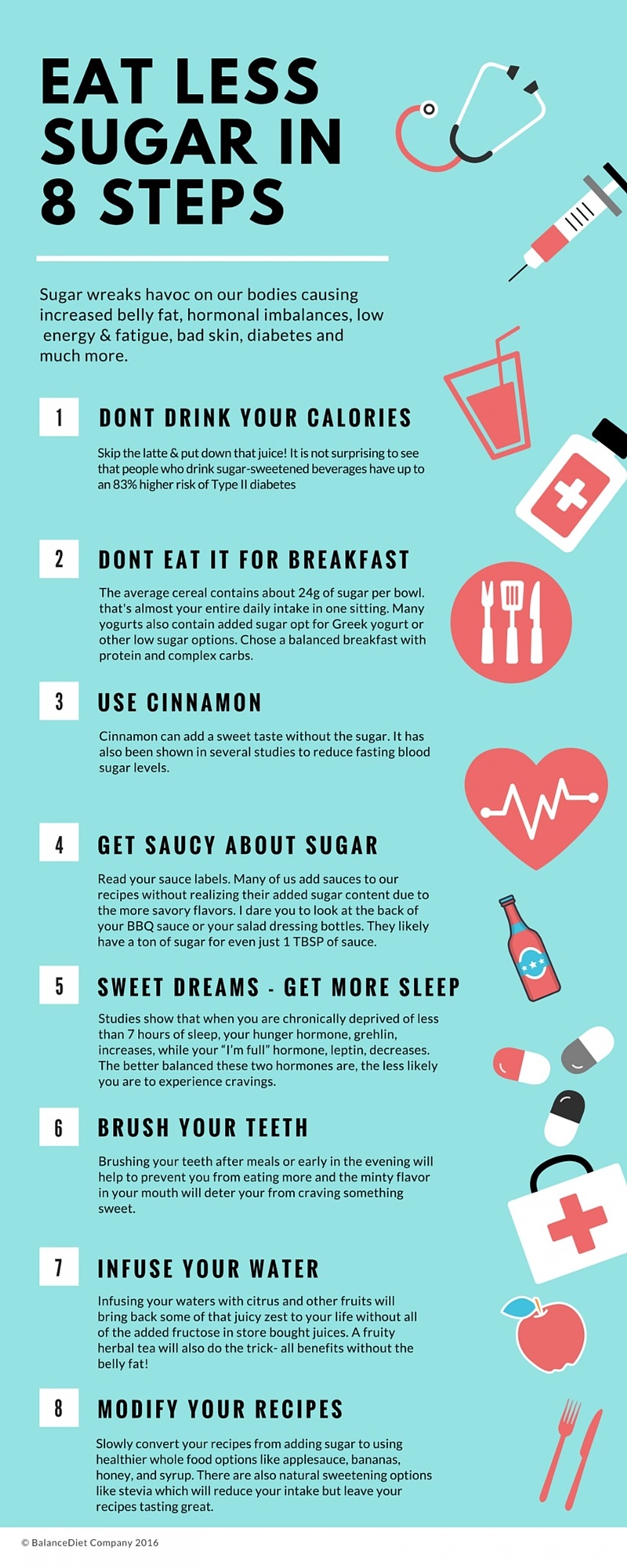
To reduce your sugar consumption, try the 8 tips below, and enroll in this course to curb your cravings.